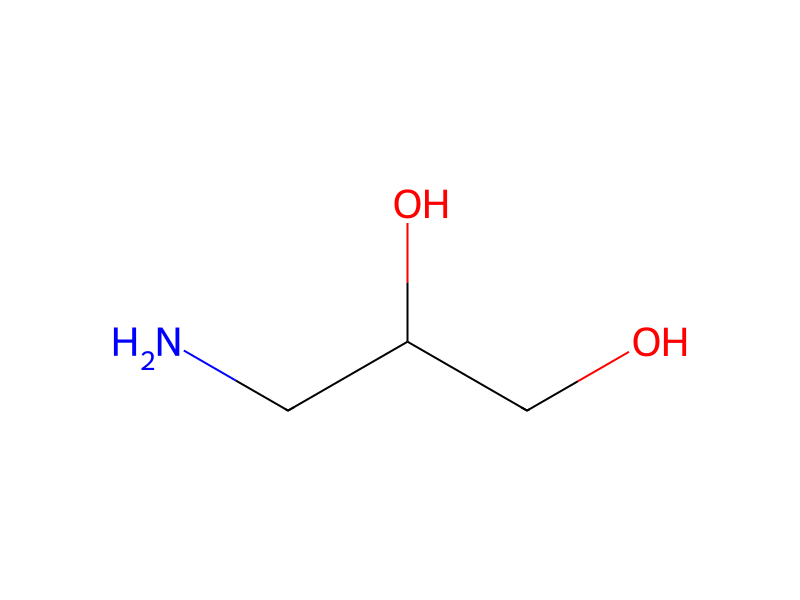
[C:1]([OH:22])(=O)[CH2:2][CH2:3][CH2:4][C:5]#[C:6][CH2:7][C:8]#[C:9][CH2:10][C:11]#[C:12][CH2:13][CH2:14][CH2:15][CH2:16][CH2:17][CH2:18][CH2:19][CH3:20].C(N1C=CN=C1)(N1C=CN=C1)=O.[OH:35][CH:36]([CH2:39][OH:40])[CH2:37][NH2:38]>CN(C=O)C.C(Cl)Cl>[OH:35][CH:36]([CH2:39][OH:40])[CH2:37][NH:38][C:1](=[O:22])[CH2:2][CH2:3][CH2:4][C:5]#[C:6][CH2:7][C:8]#[C:9][CH2:10][C:11]#[C:12][CH2:13][CH2:14][CH2:15][CH2:16][CH2:17][CH2:18][CH2:19][CH3:20]In the same manner as in the above example, 8 g of 5,8,11-eicosatriynoic acid in 40 cm3 of anhydrous DMF are treated initially with 5.62 g of carbonyldiimidazole. 4.1 cm3 of 2,3-dihydroxypropylamine are then added at 0° C. At the end of the reaction, the reaction mixture is poured into ice-cold water. The precipitated product is drained and dissolved in 300 cm3 of methylene chloride. The solution is dried over sodium sulphate and then concentrated under reduced pressure. The solid obtained is directly recrystallized in acetonitrile. 9 g of N-(2,3-dihydroxypropyl)-5,8,11-eicosatriynamide are thereby obtained in the form of very pate beige crystals of melting point 87° C.
Wird geladen…