Sodium Carbonate → 5-Cyclopropyl-2,4-dinitrobenzaldehyde
HRID 1037521
Reaktionsgleichung

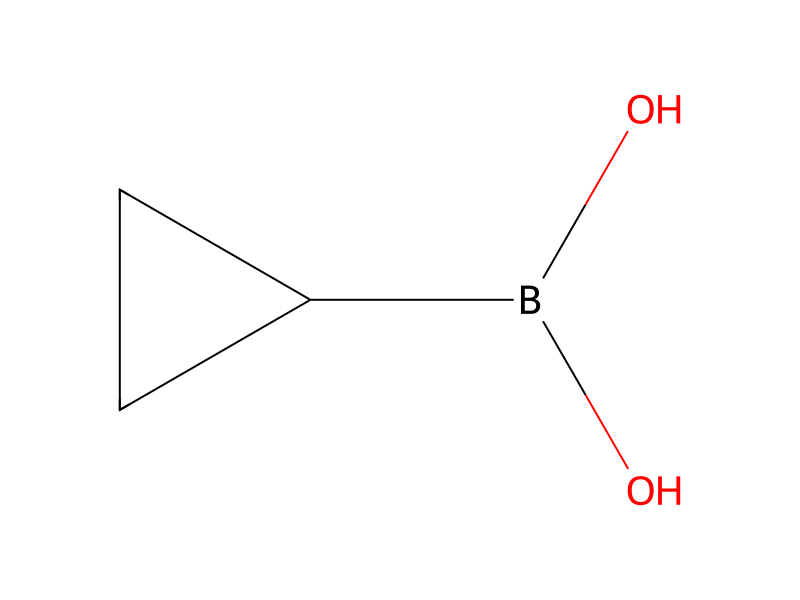
Br[C:2]1[C:3]([N+:13]([O-:15])=[O:14])=[CH:4][C:5]([N+:10]([O-:12])=[O:11])=[C:6]([CH:9]=1)[CH:7]=[O:8].C(=O)([O-])[O-].[Na+].[Na+].[CH:22]1(B(O)O)[CH2:24][CH2:23]1>C1(C)C=CC=CC=1.O.CCOC(C)=O.C1C=CC([P]([Pd]([P](C2C=CC=CC=2)(C2C=CC=CC=2)C2C=CC=CC=2)([P](C2C=CC=CC=2)(C2C=CC=CC=2)C2C=CC=CC=2)[P](C2C=CC=CC=2)(C2C=CC=CC=2)C2C=CC=CC=2)(C2C=CC=CC=2)C2C=CC=CC=2)=CC=1>[CH:22]1([C:2]2[C:3]([N+:13]([O-:15])=[O:14])=[CH:4][C:5]([N+:10]([O-:12])=[O:11])=[C:6]([CH:9]=2)[CH:7]=[O:8])[CH2:24][CH2:23]1Komponenten
8