2,6-Dibromopyridine → 6'-bromo-3-[(4-methoxybenzyl)oxy]-4H-1,2'-bipyridin-4-one
HRID 1056892
Reaktionsgleichung

[CH3:1][O:2][C:3]1[CH:17]=[CH:16][C:6]([CH2:7][O:8][C:9]2[C:14](=[O:15])[CH:13]=[CH:12][NH:11][CH:10]=2)=[CH:5][CH:4]=1.[Br:18][C:19]1[CH:24]=[CH:23][CH:22]=[C:21](Br)[N:20]=1>CS(C)=O>[Br:18][C:19]1[N:20]=[C:21]([N:11]2[CH:12]=[CH:13][C:14](=[O:15])[C:9]([O:8][CH2:7][C:6]3[CH:5]=[CH:4][C:3]([O:2][CH3:1])=[CH:17][CH:16]=3)=[CH:10]2)[CH:22]=[CH:23][CH:24]=1Komponenten
4
Edukt 2
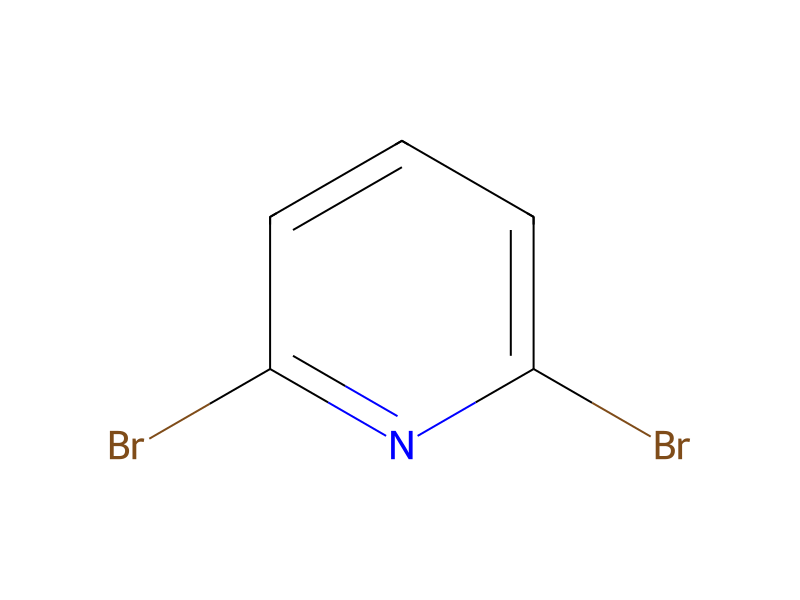

Produkt 1

Reagenzien, Katalysatoren, Lösungsmittel 1

Versuchsvorschrift
A mixture of 3-[(4-methoxybenzyl)oxyJpyridin-4(1H)-one (2.31 g, 10 mmol), 2,6-dibromopyridine (4.74 g, 20 mmol), and K2C03 (3.45 g, 25 mmol) in DMSO was heated at 120° C. overnight. After cooling to it, the solid was removed by filtration and the DMSO solution was purified by flash chromatography to give 6′-bromo-3-[(4-methoxybenzyl)oxy]-4H-1,2′-bipyridin-4-one. ′H NMR (600 MHz, DMSO): δ 8.42 (dd, J−7.7, 2.4 Hz, 1H); 8.22 (d, J=2.4 Hz, 1H); 8.03-7.96 (m, 1H); 7.96-7.89 (m, 1H); 7.71 (t, J−7.7 Hz, 1H); 7.40 (d, J=8.4 Hz, 2H); 6.96 (d, J=8.4 Hz, 2H); 6.42 (d, J=7.7 Hz, 1H); 5.03 (s, 2H); 3.76 (s, 3H). 264.1; MS (M+H)+387.