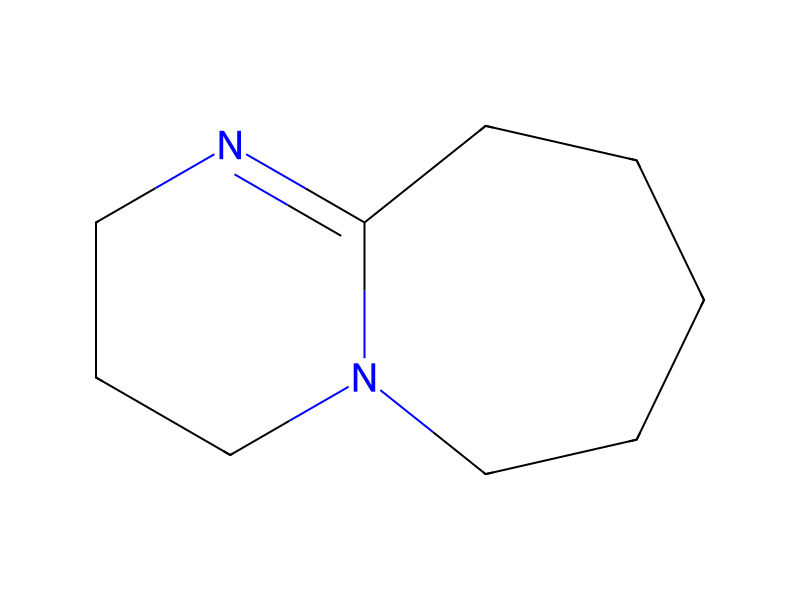
[C:1]([O:5][C:6]([NH:8][CH:9]([C:11]1[CH:18]=[CH:17][C:16]([Cl:19])=[CH:15][C:12]=1[CH2:13]O)[CH3:10])=[O:7])([CH3:4])([CH3:3])[CH3:2].C1CCN2C(=NCCC2)CC1.C1C=CC(P([N:45]=[N+:46]=[N-:47])(C2C=CC=CC=2)=O)=CC=1>C1(C)C=CC=CC=1>[C:1]([O:5][C:6]([NH:8][CH:9]([C:11]1[CH:18]=[CH:17][C:16]([Cl:19])=[CH:15][C:12]=1[CH2:13][N:45]=[N+:46]=[N-:47])[CH3:10])=[O:7])([CH3:4])([CH3:3])[CH3:2]To a stirred solution of 2-(1-(tert-butyloxycarbonylamino)ethyl)-5-chlorobenzyl alcohol from the previous step (0.475 g, 1.67 mmol) in toluene (20.0 mL) at ambient temperature under nitrogen atmosphere was added DBU (0.26 mL g, 1.74 mmol) and DPPA (0.43 mL, 2.0 mmol). The mixture was stirred at ambient temperature for 72 h. The reaction was concentrated in vacuo then partitioned between EtOAc and water. The EtOAc layer was separated, dried over anhydrous Na2SO4, and filtered. The filtrate solvent was removed under reduced pressure and the residue purified by flash silica gel chromatography using dichloromethane as an eluent. 2-(1-(tert-butyloxycarbonylamino)ethyl)-5-chlorobenzylazide was obtained as a yellow oil after concentration of desired fractions in vacuo (0.53 g; HPLC RT=3.71 min, method A).