Hydrochloric Acid → Diethyl (2,6-Dichloro-4-fluoro-phenyl)-malonate
Reaktionsgleichung

[C:1]([O:9][CH2:10][CH3:11])(=[O:8])[CH2:2][C:3]([O:5][CH2:6][CH3:7])=[O:4].[H-].[Na+].Br[C:15]1[C:20]([Cl:21])=[CH:19][C:18]([F:22])=[CH:17][C:16]=1[Cl:23].Cl>[Cu]Br.O1CCOCC1>[Cl:21][C:20]1[CH:19]=[C:18]([F:22])[CH:17]=[C:16]([Cl:23])[C:15]=1[CH:2]([C:3]([O:5][CH2:6][CH3:7])=[O:4])[C:1]([O:9][CH2:10][CH3:11])=[O:8]Komponenten
Edukt 4

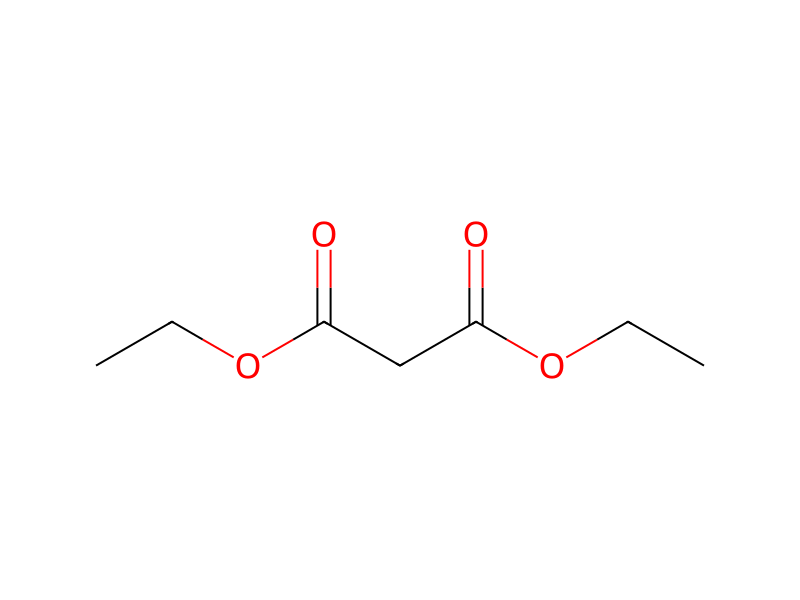


Produkt 1

Reagenzien, Katalysatoren, Lösungsmittel 2


Reaktionsbedingungen
- Temperatur
- 55 °C
Versuchsvorschrift
Diethyl malonate (0.49 mol) is added to a mixture of sodium hydride (0.51 mol) and 1,4-dioxane (140 ml) at 55 to 60° C. within 2 hours. The mixture is stirred for 10 minutes at 55° C. and copper(I) bromide (0.05 mol) is added. After 15 minutes a mixture of 1-bromo-2,6-dichloro-4-fluoro-benzene (0.25 mol) and 1,4-dioxane (10 ml) is added. The reaction mixture is heated at 100° C. for 15 hours and cooled to 15° C. Hydrochloric acid (12N, 35 ml) is added slowly at 15 to 20° C. The precipitate is filtered off. The filtrate is extracted with diethylether. The organic phase is separated, dried with anhydrous sodium sulphate and filtered. The filtrate is evaporated under reduced pressure to yield 44 g of the product as yellow crystals having a melting point of 170° C.
Aufarbeitung
- additionis added
- temperatureThe reaction mixture is heated at 100° C. for 15 hours
- temperaturecooled to 15° C
- filtrationThe precipitate is filtered off
- extractionThe filtrate is extracted with diethylether
- customThe organic phase is separated
- dry with materialdried with anhydrous sodium sulphate
- filtrationfiltered
- customThe filtrate is evaporated under reduced pressure
Quellen und Nachweise
- ORD-Eintrag
- ord-293b5934e6b74932b22467f60352c185
- Quelldatensatz
- uspto-grants-2001_06
- Patentnummer
- US06242451B1
Notizen zur Reaktion
Wird geladen…