StartseiteMCPWorkbenchSkills
StartseiteWorkbenchBenachrichtigungenMein Bereich
llms.txt · MCP-AnleitungDatenschutz · Nutzungsbedingungen · Supportv1.8.3
  1. Startseite
  2. /Reaktion

Potassium Carbonate → Diethyl 2-methyl-2-(3-methylbenzyl)-malonate

HRID 1073057
Drucken

Reaktionsgleichung

Reaktionsgleichung von HRID 1073057
C(=O)([O-])[O-].[K+].[K+].[CH3:7][CH:8]([C:14]([O:16][CH2:17][CH3:18])=[O:15])[C:9]([O:11][CH2:12][CH3:13])=[O:10].[CH3:19][C:20]1[CH:21]=[C:22]([CH:25]=[CH:26][CH:27]=1)[CH2:23]Cl>[I-].[K+].C1OCCOCCOCCOCCOCCOC1.C1(C)C=CC=CC=1>[CH3:7][C:8]([CH2:19][C:20]1[CH:27]=[CH:26][CH:25]=[C:22]([CH3:23])[CH:21]=1)([C:9]([O:11][CH2:12][CH3:13])=[O:10])[C:14]([O:16][CH2:17][CH3:18])=[O:15]
KomponentenReaktionsbedingungenVersuchsvorschriftAufarbeitungQuellen und NachweiseNotizen zur Reaktion

Komponenten

7

Edukt 3

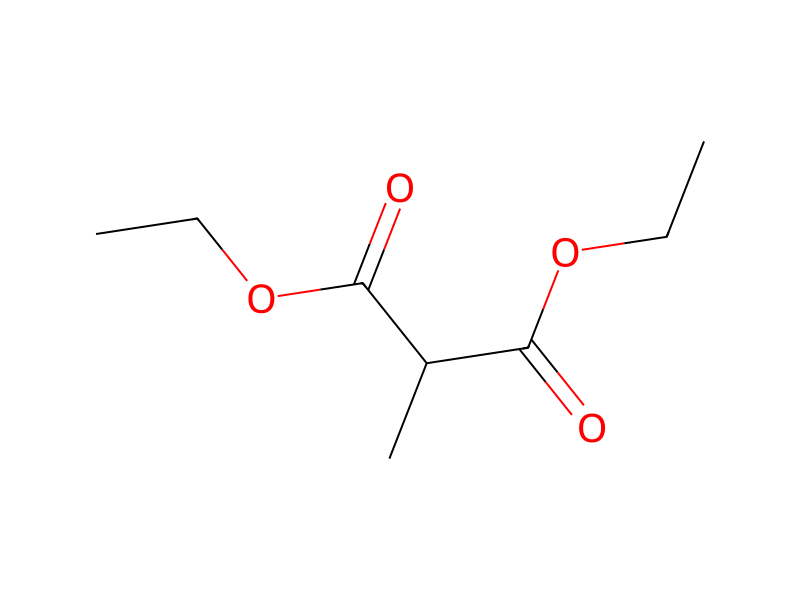
HCID 11430Potassium CarbonateHCID 11857Diethyl methylmalonateHCID 12102m-Xylyl chloride

Produkt 1

HCID 22157936Diethyl 2-methyl-2-(3-methylbenzyl)-malonateAusbeute 65,9 %

Reagenzien, Katalysatoren, Lösungsmittel 3

HCID 4875Potassium IodideKatalysator
HCID 28557
18-Crown-6
Katalysator
HCID 1140TolueneLösungsmittel

Reaktionsbedingungen

Temperatur
85 °C

Versuchsvorschrift

500 ml of toluene, 207 g of ground potassium carbonate, 8 g of potassium iodide, 7 g of 18-crown-6 and 209 g of diethyl methylmalonate were initially introduced into a 2 l four-necked flask. The mixture was heated to 85° C. with stirring. 141 g of 3-methylbenzyl chloride were added dropwise in the course of half an hour and the mixture was then stirred at 90° C. for 8 hours. After cooling, the salts were removed by repeatedly shaking with water and the organic layer was distilled. 184 g of diethyl 2-methyl-2-(3-methylbenzyl)-malonate were obtained at a boiling point of 120° C. and a pressure of about 0.02 mbar. For hydrolysis, the ester was boiled under reflux with stirring for 16 hours with 60 g of NaOH, 170 ml of water and a spatula tip-full of tetradecyltrimethylammonium bromide, ethanol which formed in the meantime being distilled off. The dicarboxylic acid was liberated by acidifying with hydrochloric acid, separated off and heated in xylene for 4 hours under reflux for decarboxylation. The monocarboxylic acid was then esterified with ethanol (p-toluenesulfonic acid as catalyst, cyclohexane as entraining agent for water). 115 g of ethyl 2-(3-methylbenzyl)-propionate (boiling point 70°-73° C. at 0.03 mbar) were obtained. For hydrogenation, 21 g of LiAlH4 were dissolved or suspended in 800 ml of tetrahydrofuran in a 2 l four-necked flask under nitrogen. A mixture of 110 g of ethyl 2-(3-methylbenzyl)-propionate and 100 ml of tetrahydrofuran were then added dropwise with ice cooling. The mixture was then decomposed with ice and hydrochloric acid, extracted with ether and dried over K2CO3, and 75 g of 2-methyl-3-(3-methylphenyl)propan-1-ol (boiling point 68°-70° C. at 0.1 mbar) were obtained by distillation.


Aufarbeitung

  1. stirringthe mixture was then stirred at 90° C. for 8 hours
  2. temperatureAfter cooling
  3. customthe salts were removed
  4. stirringby repeatedly shaking with water
  5. distillationthe organic layer was distilled

Quellen und Nachweise

ORD-Eintrag
ord-ed38d7e85ca24529a2d2fdc2d84f4e80
Quelldatensatz
uspto-grants-1990_11
DOI
10.6084/m9.figshare.5104873.v1
Patentnummer
US04968668

Notizen zur Reaktion

Auf dieser SeiteKomponentenReaktionsbedingungenVersuchsvorschriftAufarbeitungQuellen und NachweiseNotizen zur Reaktion