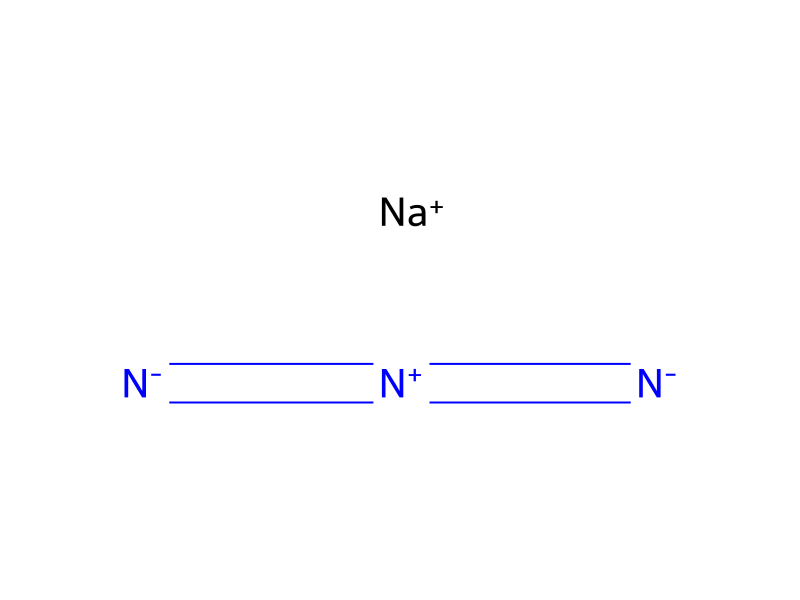
[C:1]([C:5]1[CH:6]=[C:7]([CH:15]=[C:16]([C:18]([CH3:21])([CH3:20])[CH3:19])[CH:17]=1)[O:8][CH2:9][CH2:10][CH2:11][CH2:12][C:13]#[N:14])([CH3:4])([CH3:3])[CH3:2].[N-:22]=[N+:23]=[N-:24].[Na+].[Cl-].[NH4+].[Cl-].[Li+]>O.CN(C)C=O>[C:1]([C:5]1[CH:6]=[C:7]([CH:15]=[C:16]([C:18]([CH3:21])([CH3:20])[CH3:19])[CH:17]=1)[O:8][CH2:9][CH2:10][CH2:11][CH2:12][C:13]1[NH:24][N:23]=[N:22][N:14]=1)([CH3:4])([CH3:3])[CH3:2]A mixture containing 2.87 g (0.10 mole) of 5-(3,5-di-t-butylphenoxy)pentanenitrile, 1.95 g (0.03 mole) sodium azide, 1.60 g (0.03 mole) ammonium chloride, 0.42 g (0.01 mole) lithium chloride and 25 ml of dimethylformamide was heated at 120° C. in a stoppered flask for about sixteen hours. Analysis of the reaction mixture by high pressure liquid chromatography revealed that the reaction still contained nitrile. The reaction was recharged with 1.95 g of sodium azide and 1.60 g of ammonium chloride and heated for an additional sixteen hours. The reaction mixture was poured into 250 ml of water. The resulting precipitate was collected, rinsed with water, air dried and recrystallized twice from aqueous methanol to give 1.8 g of white solid 5-[4-(3,5-di-t-butylphenoxy)butyl]tetrazole, m.p. 140°-141° C. Analysis: Calculated for C19H30N4O: %C, 69.1; %H, 9.2; %N, 17.0; Found: %C, 69.0; %H, 9.1; %N, 17.1.