Reaktionsgleichung

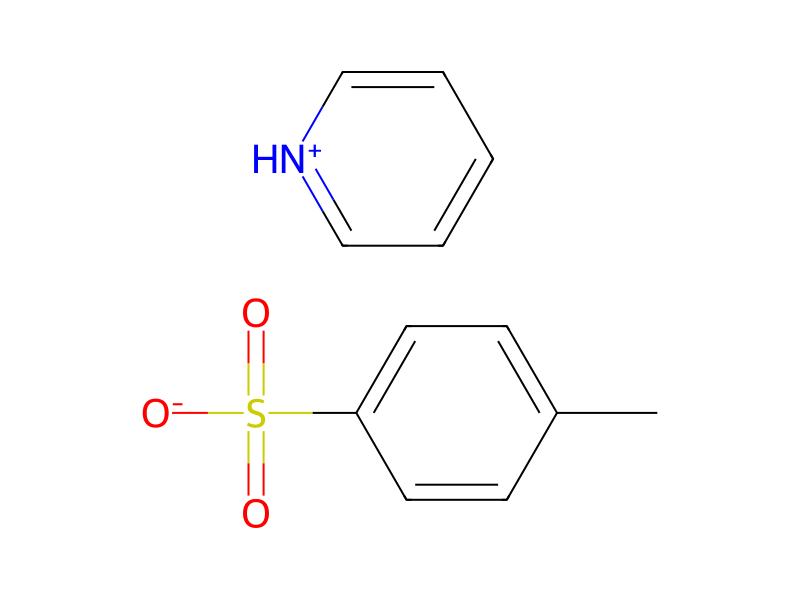
[C:1]([O:4][CH2:5][CH:6]([OH:9])[CH2:7][Cl:8])(=[O:3])[CH3:2].[O:10]1[CH:15]=[CH:14][CH2:13][CH2:12][CH2:11]1.C1(C)C=CC(S([O-])(=O)=O)=CC=1.[NH+]1C=CC=CC=1>C(Cl)Cl>[C:1]([O:4][CH2:5][CH:6]([O:9][CH:11]1[CH2:12][CH2:13][CH2:14][CH2:15][O:10]1)[CH2:7][Cl:8])(=[O:3])[CH3:2]Komponenten




Versuchsvorschrift
A solution of 271.9 g (1.78 moles) of 3-chloro-2-hydroxy-1-propyl acetate, 244 ml (2.67 moles) of freshly distilled dihydropyran, and 44.7 g (0.178 moles) of pyridinium p-toluenesulfonate in 1800 mL of methylene chloride was stirred at room temperature with cooling to control the reaction exotherm. After 22 hours the reaction mixture was washed with 500 mL of water and 250 mL of sodium chloride solution, and was dried over sodium sulfate. Solvent was removed and the residue was dried at 0.03 mm for 1.5 hours to give 473.3 g of crude 3-chloro-2-tetrahydropyranyloxy-1-propyl acetate: 1H NMR (CDCl3) δ1.63 (br. s, 6 H, (CH2)3); 2.08 (s, 3H, CH3CO); 3.5-4.3 (7H, CH2CHCH2); 4.73 (br. s, 1H, --O--CH); IR (neat, NaCl) 3000, 2910 (C--H); 1740 cm- 1 (--O--CO--CH3).
Aufarbeitung
- temperaturewith cooling
- customthe reaction exotherm
- washAfter 22 hours the reaction mixture was washed with 500 mL of water and 250 mL of sodium chloride solution
- dry with materialwas dried over sodium sulfate
- customSolvent was removed
- customthe residue was dried at 0.03 mm for 1.5 hours
Quellen und Nachweise
- ORD-Eintrag
- ord-6da761fed5ce46139d12240f4f8561a4
- Quelldatensatz
- uspto-grants-1983_07
- Patentnummer
- US04395561
Verknüpfte Notizen
Wird geladen…