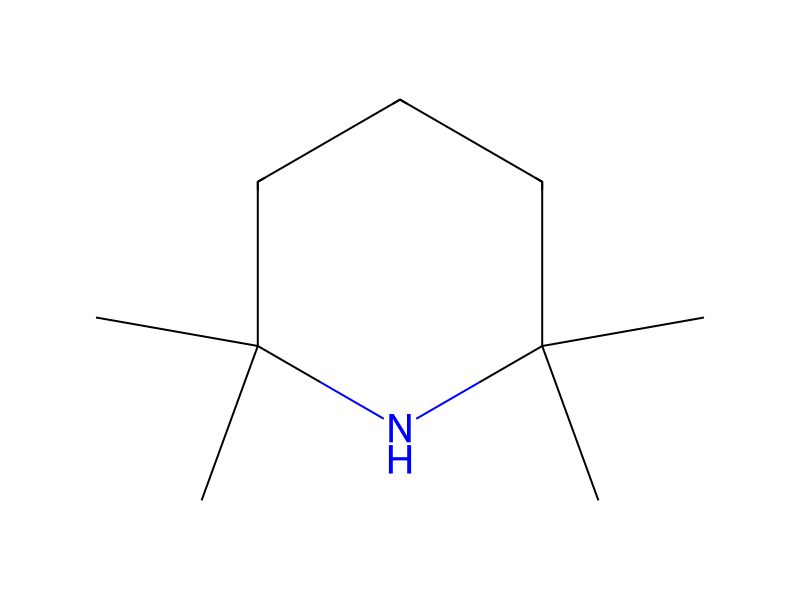
2,2,6,6-Tetramethylpiperidine → HCID 21541288, Verbindung
Reaktionsgleichung

[CH3:1][C:2]1([CH3:10])[CH2:7][CH2:6][CH2:5][C:4]([CH3:9])([CH3:8])[NH:3]1.[O:11]1[CH:13]([CH2:14][O:15][C:16]2[CH:21]=[CH:20][CH:19]=[C:18]([CH2:22][C:23]3[CH:28]=[CH:27][CH:26]=[CH:25][N:24]=3)[CH:17]=2)[CH2:12]1>CCCCCO>[CH3:1][C:2]1([CH3:10])[CH2:7][CH2:6][CH2:5][C:4]([CH3:9])([CH3:8])[N:3]1[CH2:12][CH:13]([OH:11])[CH2:14][O:15][C:16]1[CH:21]=[CH:20][CH:19]=[C:18]([CH2:22][C:23]2[CH:28]=[CH:27][CH:26]=[CH:25][N:24]=2)[CH:17]=1Komponenten
4
Edukt 2

Produkt 1

Reagenzien, Katalysatoren, Lösungsmittel 1

Versuchsvorschrift
8.9 g of 2,2,6,6-tetramethylpiperidine is added to a solution of 15.0 g of 1,2-epoxy- 3-[3-(2-pyridylmethyl)phenoxy]propane in 45 ml of n-amyl alcohol, and the resulting mixture is heated on a water bath for 2 hours. The solvent is then removed, 200 ml of benzene is added to the residue, and the insoluble matter is filtered off with activated charcoal. The filtrate is washed with water, and extracted with two 100 ml portions of 5% hydrochloric acid. The aqueous layer is made alkaline with sodium hydroxide, and the separated oil is extracted with benzene. The benzene layer is washed with water, dried over anhydrous potassium carbonate, and the solvent is removed. The residual oil is purified by distillation to give 4.5 g of 1-(2,2,6,6-tetramethylpiperidino)-3-[3-(2-pyridylmethyl)phenoxy]-2 -propanol, boiling at 230°-235°C/0.15 mmHg.