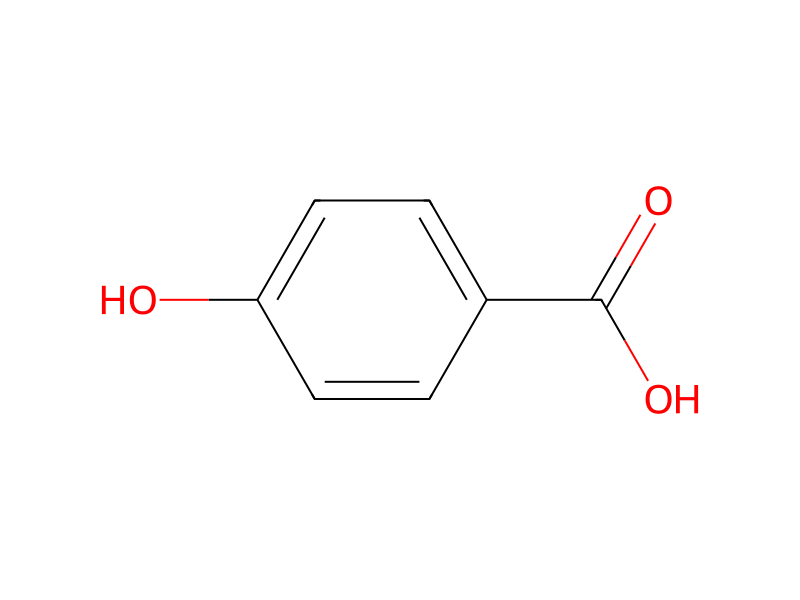
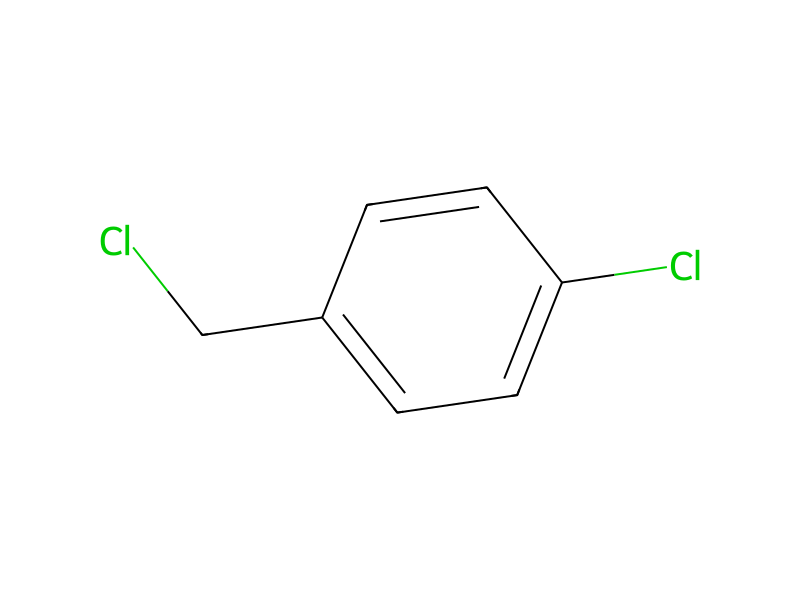
[OH:1][C:2]1[CH:10]=[CH:9][C:5]([C:6]([OH:8])=[O:7])=[CH:4][CH:3]=1.[Cl:11][C:12]1[CH:19]=[CH:18][C:15]([CH2:16]Cl)=[CH:14][CH:13]=1.C(=O)([O-])[O-].[K+].[K+].C(OCC)(=O)C.O>CN(C)C=O>[Cl:11][C:12]1[CH:19]=[CH:18][C:15]([CH2:16][O:1][C:2]2[CH:10]=[CH:9][C:5]([C:6]([OH:8])=[O:7])=[CH:4][CH:3]=2)=[CH:14][CH:13]=1To a solution of 10 g of 4-hydroxybenzoic acid in 100 ml of N,N-dimethylformamide were added 29.1 g of 4-chlorobenzyl chloride and 25 g of potassium carbonate. The mixture was stirred at 60° C. for 3 hours. After cooling, the reaction mixture was treated with ethyl acetate-water. The resulting ethyl acetate layer was separated, washed with water, dried with anhydrous magnesium sulfate, and subjected to vacuum distillation to remove the solvent. The resulting residue was washed with n-hexane, then collected by filtration, and suspended in 50 ml of ethanol. To the suspension was added 100 ml of a 2N aqueous sodium hydroxide solution. The mixture was stirred at room temperature for 4 days and then neutralized with concentrated hydrochloric acid. The resulting crystals were collected by filtration and recrystallized from chloroform to obtain 16.7 g of 4-(4-chlorobenzyloxy)benzoic acid.