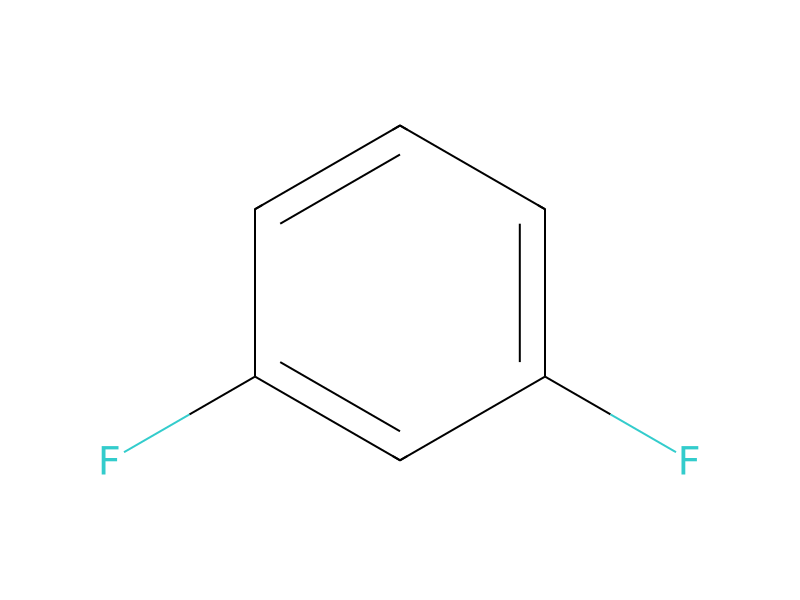
1,3-Difluorobenzene (2.02 g; 17.7 mM) and anhydrous aluminium chloride (2.60 g; 19.47 mM) were stirred together under dry nitrogen at room temperature. A solution of fluoroacetyl chloride (1,71 g; 17.7 mM) in anhydrous methylene chloride (2 ml) was added over 30 minutes. The mixture was then warmed at about 50° for 3 hours. On cooling methylene chloride (40 ml) was added and the mixture was poured onto ice. The methylene chloride layer was separated, dried over magnesium sulphate and evaporated to give a white solid. This material was chromatographed on a column of silica eluting with a mixture of hexane/methylene chloride (65:35 by volume). The product-containing fractions were collected. The title compound crystallised on evaporation of these fractions and was dried in a vacuum desiccator to a colourless crystalline solid (1.12 g; 36% yield), melting point 57°-8°.