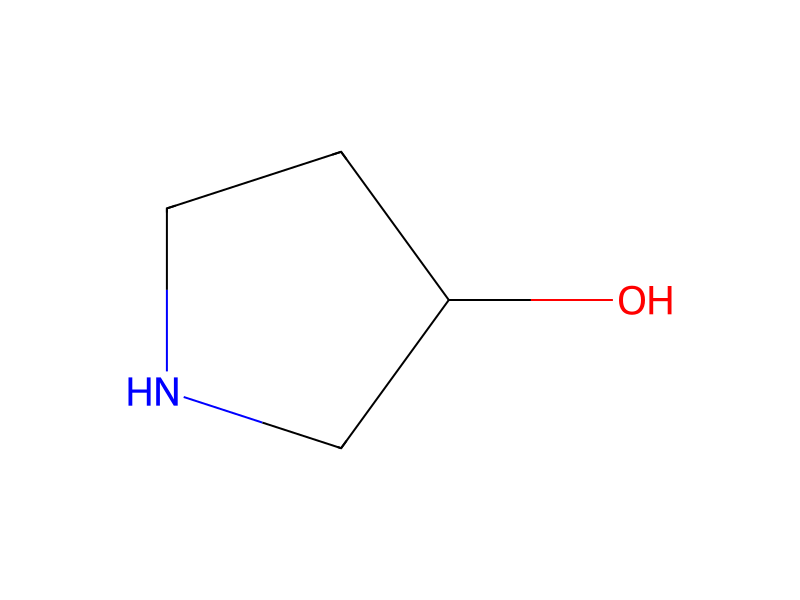
[O:1]1[C:5]2[CH:6]=[CH:7][C:8]([CH2:10][CH2:11][O:12][CH2:13][C:14]([OH:16])=O)=[CH:9][C:4]=2[CH:3]=[CH:2]1.C(N1C=CN=C1)(N1C=CN=C1)=O.[NH:29]1[CH2:33][CH2:32][CH:31]([OH:34])[CH2:30]1.Cl>O1CCCC1.C(OCC)(=O)C.O.C(N(CC)CC)C>[O:1]1[C:5]2[CH:6]=[CH:7][C:8]([CH2:10][CH2:11][O:12][CH2:13][C:14]([N:29]3[CH2:33][CH2:32][CH:31]([OH:34])[CH2:30]3)=[O:16])=[CH:9][C:4]=2[CH:3]=[CH:2]1In 13.0 mL of tetrahydrofuran was dissolved 1.28 g of 2-[2-(1-benzofuran-5-yl)ethoxy]acetic acid and the solution was cooled to 5° C., after which 1.41 g of 1,1′-carbonyldiimidazole was added thereto and the resulting mixture was stirred at room temperature for 2 hours. To the reaction mixture were added 1.22 mL of triethylamine and 0.72 mL of 3-pyrrolidinol, followed by stirring at room temperature for 2 hours. Water and ethyl acetate were added to the reaction mixture and the pH was adjusted to 1 with 6 mol/L hydrochloric acid, after which the organic layer was separated. The organic layer was washed with a saturated aqueous sodium hydrogencarbonate solution and then a saturated aqueous sodium chloride solution, and dried over anhydrous magnesium sulfate. Then, the solvent was distilled off under reduced pressure to obtain 1.39 g of 2-[2-(1-benzofuran-5-yl)ethoxy]-1-(3-hydroxy-1-pyrrolidinyl)-1-ethanone as a colorless oil.