StartseiteMCPWorkbenchSkills
StartseiteWorkbenchBenachrichtigungenMein Bereich
llms.txt · MCP-AnleitungDatenschutz · Nutzungsbedingungen · Supportv1.8.3
  1. Startseite
  2. /Reaktion

2,6-Lutidine → N-[3-[2-(Trifluoromethoxy)phenyl]-2-amino-6-pyridyl]-3-methylisoxazole-4-carboxamide

HRID 1094784
Drucken

Reaktionsgleichung

Reaktionsgleichung von HRID 1094784
[CH3:1][C:2]1[C:6]([C:7]([OH:9])=O)=[CH:5][O:4][N:3]=1.S(Cl)(Cl)=O.[F:14][C:15]([F:32])([F:31])[O:16][C:17]1[CH:22]=[CH:21][CH:20]=[CH:19][C:18]=1[C:23]1[C:24]([NH2:30])=[N:25][C:26]([NH2:29])=[CH:27][CH:28]=1.N1C(C)=CC=CC=1C>C(OC(=O)C)(C)C>[NH2:30][C:24]1[N:25]=[C:26]([NH:29][C:7]([C:6]2[C:2]([CH3:1])=[N:3][O:4][CH:5]=2)=[O:9])[CH:27]=[CH:28][C:23]=1[C:18]1[CH:19]=[CH:20][CH:21]=[CH:22][C:17]=1[O:16][C:15]([F:32])([F:14])[F:31]
KomponentenReaktionsbedingungenVersuchsvorschriftAufarbeitungQuellen und NachweiseNotizen zur Reaktion

Komponenten

6

Edukt 4

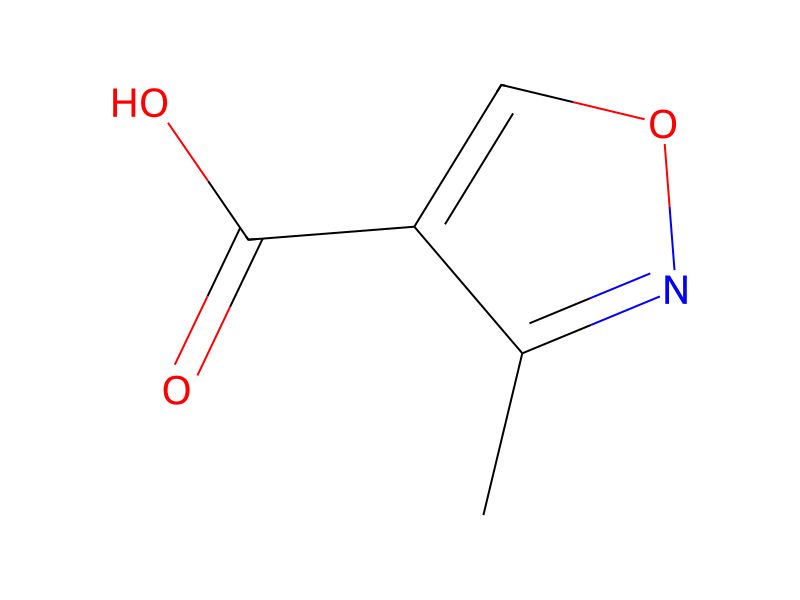
HCID 79372,6-LutidineHCID 24386Thionyl ChlorideHCID 45896923-Methyl-1,2-oxazole-4-carboxylic acidHCID 575823273-(2-(Trifluoromethoxy)phenyl)pyridine-2,6-diamine

Produkt 1

HCID 25159060N-[3-[2-(Trifluoromethoxy)phenyl]-2-amino-6-pyridyl]-3-methylisoxazole-4-carboxamideAusbeute 46 %

Reagenzien, Katalysatoren, Lösungsmittel

1
HCID 7915Isopropyl AcetateLösungsmittel2×

Reaktionsbedingungen

Temperatur
70 °C

Versuchsvorschrift

To a suspension of 3-methylisoxazole-4-carboxylic acid (2.58 g, 20 mmol) in isopropylacetate (26 ml) was added thionyl chloride (2.4 g, 1.47 ml, 20 mmol) and the reaction heated to 70° C. for 5 hours before cooling to room temperature. 11/12ths of this solution was added dropwise to a solution of 3-[2-(trifluoromethoxy)phenyl]pyridine-2,6-diamine (Preparation 2, 4.56 g, 16.9 mmol) and 2,6-lutidine (3.98 g, 4.3 ml, 37.2 mmol) in isopropylacetate (23 ml). The reaction was stirred at room temperature for 30 minutes during which a slurry was formed caused by crystallisation of lutidine hydrochloride. 20% w/w citric acid (46 ml) was added, the biphasic mixture stirred for 10 minutes before separation. The organic phase was washed with saturated sodium bicarbonate solution (46 ml), water (46 ml) and then reduced in volume to 16 ml. Toluene was then added (2×46 ml) and the volume reduced again to 20 ml. The resultant white solid was collected by filtration, washed with toluene (10 ml) and dried to afford the title compound in 46% yield. The white solid (2.1 g) was slurried in toluene (10 ml, 5 ml/g) and heated to reflux to form a solution. The resultant solution was cooled to 0° C. and granulated for 1 hour. The solid was collected by filtration, washed with toluene (6 ml, 3 ml/g) and dried overnight to yield 1.8 g of crystalline material.

Aufarbeitung

  1. temperaturebefore cooling to room temperature
  2. customwas formed
  3. customcaused by crystallisation of lutidine hydrochloride
  4. addition20% w/w citric acid (46 ml) was added
  5. stirringthe biphasic mixture stirred for 10 minutes before separation
  6. washThe organic phase was washed with saturated sodium bicarbonate solution (46 ml), water (46 ml)
  7. additionToluene was then added (2×46 ml)
  8. filtrationThe resultant white solid was collected by filtration
  9. washwashed with toluene (10 ml)
  10. customdried

Quellen und Nachweise

ORD-Eintrag
ord-f62b783ef0594d05a143f2f79fa64bac
Quelldatensatz
uspto-grants-2012_03
DOI
10.6084/m9.figshare.5104873.v1
Patentnummer
US08134007B2

Notizen zur Reaktion

Auf dieser SeiteKomponentenReaktionsbedingungenVersuchsvorschriftAufarbeitungQuellen und NachweiseNotizen zur Reaktion