Reaktionsgleichung

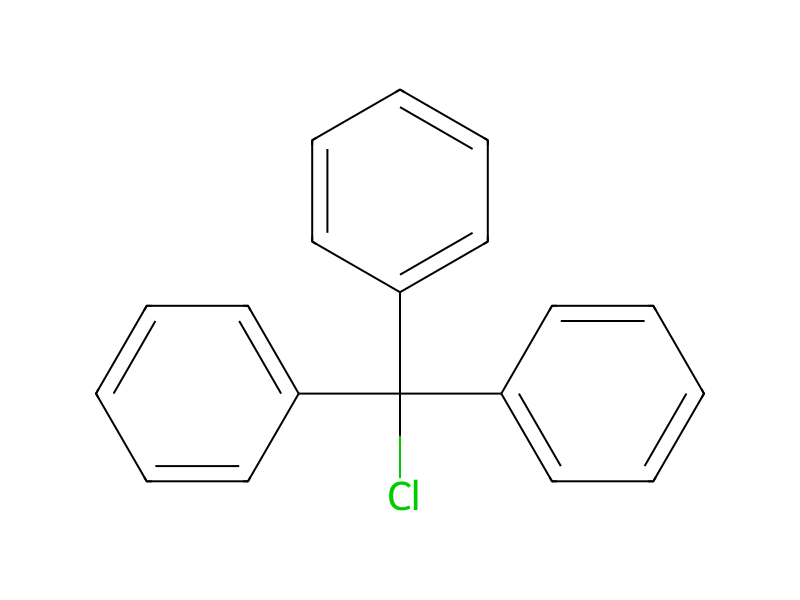
[C:1]1([C:15]2[CH:20]=[CH:19][CH:18]=[CH:17][CH:16]=2)[CH:6]=[CH:5][C:4]([CH:7]([C:9]2[CH:14]=[CH:13][CH:12]=[CH:11][CH:10]=2)Cl)=[CH:3][CH:2]=1.C1(C(C2C=CC=CC=2)(C2C=CC=CC=2)Cl)C=CC=CC=1.C[Si]([C:45]1[NH:46][CH:47]=[CH:48][N:49]=1)(C)C>C(#N)C>[C:1]1([C:15]2[CH:20]=[CH:19][CH:18]=[CH:17][CH:16]=2)[CH:6]=[CH:5][C:4]([CH:7]([N:46]2[CH:47]=[CH:48][N:49]=[CH:45]2)[C:9]2[CH:14]=[CH:13][CH:12]=[CH:11][CH:10]=2)=[CH:3][CH:2]=1Komponenten
5
Edukt 3


Produkt 1

Reagenzien, Katalysatoren, Lösungsmittel 1

Versuchsvorschrift
167 g (0.6 mol) of biphenyl-4-yl-phenyl-chloromethane [alternatively named as diphenyl-phenyl-chloromethane or as α-(biphenyl-4-yl)benzyl chloride] and 92 g (0.66 mol) of trimethylsilylimidazole, dissolved in 500 ml of acetonitrile, are heated under reflux for 15 hours. After distilling off the solvent, the crystalline residue is purified by recrystallization from ethyl acetate. 97 g (52% of theory) of (biphenyl-4-yl)-imidazol-1-yl-phenylmethane of melting point 142° C. are obtained.
Aufarbeitung
- temperatureare heated
- temperatureunder reflux for 15 hours
- distillationAfter distilling off the solvent
- customthe crystalline residue is purified by recrystallization from ethyl acetate
Quellen und Nachweise
- ORD-Eintrag
- ord-5bffc8abda5f4c0ba78b60f58d66befa
- Quelldatensatz
- uspto-grants-1978_10
- Patentnummer
- US04118487
Verknüpfte Notizen
Wird geladen…