1-Chloro-4-(chloromethyl)benzene → 2-Amino-7-(p-chloro-benzyl)-6,7,8,9-tetrahydro-5H-pyrazino[2,3-d]azepine
Reaktionsgleichung

Br.Br.[NH2:3][C:4]1[CH:5]=[N:6][C:7]2[CH2:13][CH2:12][NH:11][CH2:10][CH2:9][C:8]=2[N:14]=1.C(N(C(C)C)C(C)C)C.[Cl:24][C:25]1[CH:32]=[CH:31][C:28]([CH2:29]Cl)=[CH:27][CH:26]=1>C(#N)C>[NH2:3][C:4]1[CH:5]=[N:6][C:7]2[CH2:13][CH2:12][N:11]([CH2:29][C:28]3[CH:31]=[CH:32][C:25]([Cl:24])=[CH:26][CH:27]=3)[CH2:10][CH2:9][C:8]=2[N:14]=1Komponenten
5
Edukt 3
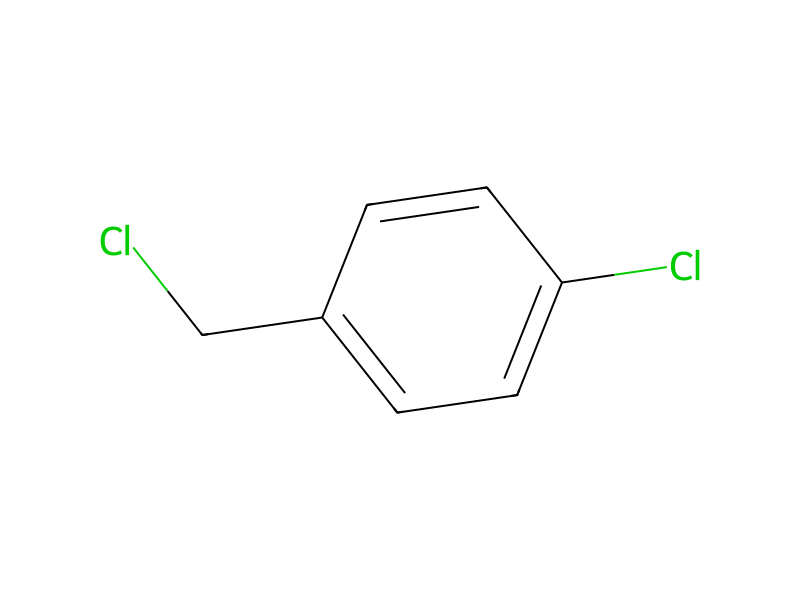


Produkt 1

Reagenzien, Katalysatoren, Lösungsmittel 1

Versuchsvorschrift
3.0 gm (9.2 mmols) of 2-amino-6,7,8,9-tetrahydro-5H-pyrazino[2,3-d]azepine dihydrobromide were suspended in 100 ml of acetonitrile, 7.5 ml of N-ethyl-diisopropylamine were added to the suspension, and the mixture was admixed dropwise with 1.5 gm (9.3 mmols) of p-chloro-benzyl-chloride. The reaction mixture was stirred for 48 hours and then evaporated, the residue was acidified with dilute hydrochloric acid, and the mixture was extracted with methylene chloride. The aqueous phase was made alkaline and then exhaustively extracted with methylene chloride, the extracts were evaporated, and the residue was column-chromatographically purified on silicagel with ethyl acetate as the mobile phase.
Aufarbeitung
- customevaporated
- extractionthe mixture was extracted with methylene chloride
- extractionexhaustively extracted with methylene chloride
- customthe extracts were evaporated
- custompurified on silicagel with ethyl acetate as the mobile phase
Quellen und Nachweise
- ORD-Eintrag
- ord-e74a67af837d4dd68326f1f38487f1b6
- Quelldatensatz
- uspto-grants-1984_12
- Patentnummer
- US04486433
Notizen zur Reaktion
Wird geladen…