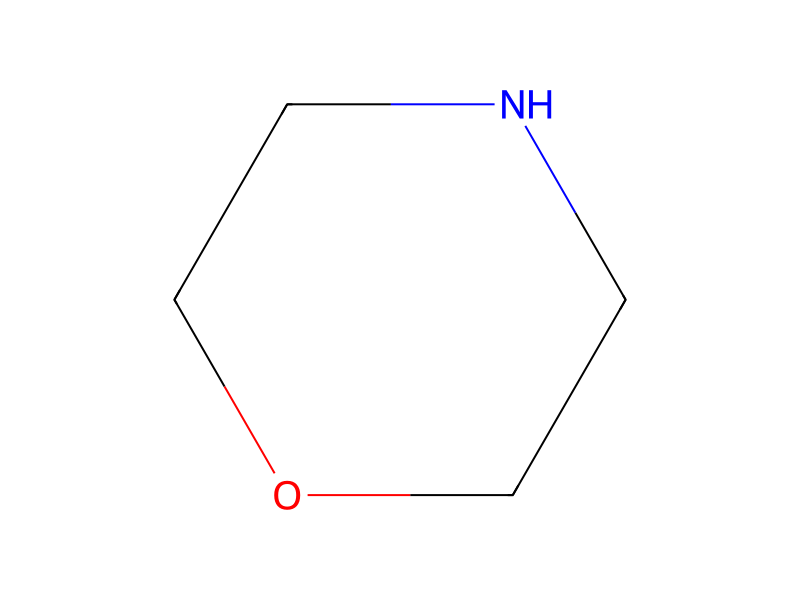
A room temperature solution of 1.1180 gms. 4-(4-nitro-phenyl)-butyric acid in tetrahydrofuran (3 mL) is treated with 0.9052 gms. 1′,1′-carbonyl-diimidizole using an ice bath to attenuate the intensity of the reaction. The reaction mixture is stirred for 1 h. The reaction mixture is then treated with 0.5 mL morpholine. The reaction is heated overnight at 35° C. The reaction is then allowed to cool to room temperature, and is made basic with the addition of saturated aqueous sodium bicarbonate. The resulting mixture is extracted with ethyl acetate. The organics are dried over anhydrous sodium sulfate, filtered and evaporated to dryness in vacuo. The crude product residue is then chromatographed by flash silica gel chromatography using 60% ethyl acetate in hexanes as the eluant. Following evaporation of solvent, 1-morpholin-4-yl-4-(4-nitro-phenyl)-butan-1-one is isolated as a white solid in the amount of 1.3925 gms.