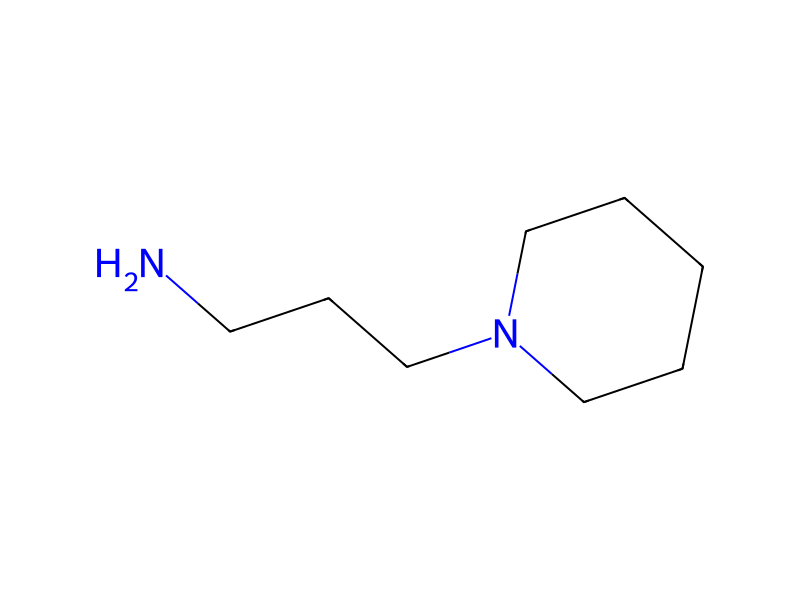
[F:1][C:2]1[CH:3]=[C:4]([CH:8]([C:10]2[N:11]([CH3:16])[C:12](Cl)=[N:13][CH:14]=2)[OH:9])[CH:5]=[CH:6][CH:7]=1.[N:17]1([CH2:23][CH2:24][CH2:25][NH2:26])[CH2:22][CH2:21][CH2:20][CH2:19][CH2:18]1.C(N(C(C)C)CC)(C)C>C1COCC1>[F:1][C:2]1[CH:3]=[C:4]([CH:8]([C:10]2[N:11]([CH3:16])[C:12]([NH:26][CH2:25][CH2:24][CH2:23][N:17]3[CH2:22][CH2:21][CH2:20][CH2:19][CH2:18]3)=[N:13][CH:14]=2)[OH:9])[CH:5]=[CH:6][CH:7]=1To a solution of (3-fluoro-phenyl)-(2-chloro-3-methyl-3H-imidazol-4-yl)-methanol (1 equivalent) in THF (0.2 M) is added 3-piperidin-1-ylpropylamine (1.5 equivalents) and diisopropylethylamine (1.5 equivalents). The mixture is heated at reflux until HPLC analysis shows consumption of the starting material. The reaction mixture is cooled to rt, quenched with satd. aq. NH4Cl, and extracted with EtOAc (2×). The combined organic extracts are washed with water and brine, dried over anhydrous Na2SO4, filtered and concentrated. The crude material is purified by chromatography or recrystallization to provide the desired product.