StartseiteMCPSkillsWorkbenchOpenChem
StartseiteWorkbenchBenachrichtigungenMein Bereich
llms.txt · skill.md · MCP-AnleitungDatenschutz · Nutzungsbedingungen · Supportv1.8.5
  1. Startseite
  2. /Reaktion

Cyclopropanemethanol → 5-Bromo-6-cyclopropylmethoxy-2-methyl-nicotinic acid ethyl ester

HRID 1159290
Drucken

Reaktionsgleichung

[CH2:1]([O:3][C:4]([C:6]1[C:7]([CH3:14])=[N:8][C:9](Cl)=[C:10]([Br:12])[CH:11]=1)=[O:5])[CH3:2].[OH:15][CH2:16][CH:17]1[CH2:19][CH2:18]1.C1CCN2C(=NCCC2)CC1>>[CH2:1]([O:3][C:4](=[O:5])[C:6]1[CH:11]=[C:10]([Br:12])[C:9]([O:15][CH2:16][CH:17]2[CH2:19][CH2:18]2)=[N:8][C:7]=1[CH3:14])[CH3:2]
KomponentenReaktionsbedingungenVersuchsvorschriftAufarbeitungQuellen und NachweiseNotizen zur Reaktion

Komponenten

4

Edukt 3

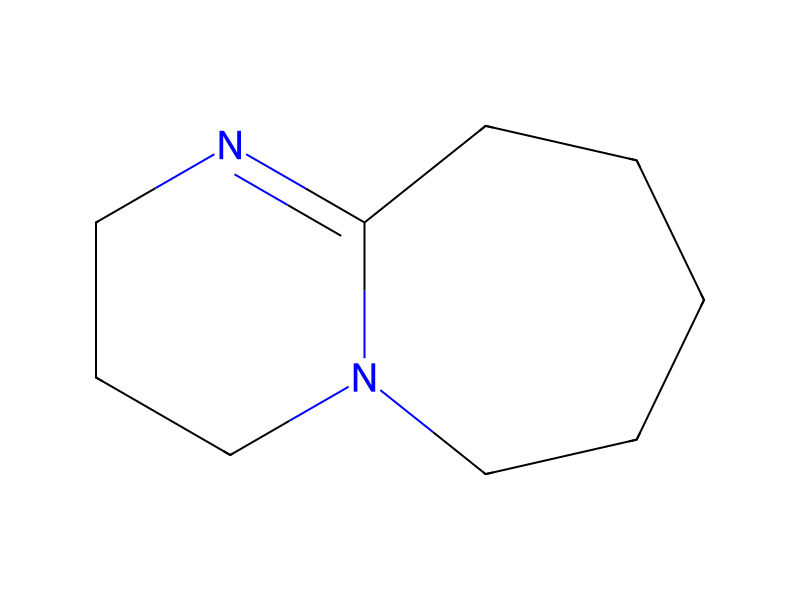
HCID 75644CyclopropanemethanolHCID 811841,8-Diazabicyclo(5.4.0)undec-7-eneHCID 86619573Ethyl 5-bromo-6-chloro-2-methylnicotinate

Produkt 1

HCID 675050075-Bromo-6-cyclopropylmethoxy-2-methyl-nicotinic acid ethyl ester

Reaktionsbedingungen

Temperatur
100 °C

Versuchsvorschrift

A mixture of 5-bromo-6-chloro-2-methyl-3-pyridinecarboxylic acid ethyl ester (CAN 41598-77-0) (0.7 g, 2.5 mmol), hydroxymethylcyclopropane (0.57 mL, 6.2 mmol) and DBU (0.94 mL) was heated for 15 min in a microwave oven to 100° C. The reaction mixture was cooled to room temperature and partitioned between 10% citric acid and ethyl acetate. The phases were separated and the organic phase was purified by chromatography on silica gel with a cyclohexane:ethyl acetate gradient to yield the title compound as light yellow solid, MS (ISP) 314.0, 316.0 (M+H)+.

Aufarbeitung

  1. temperatureThe reaction mixture was cooled to room temperature
  2. custompartitioned between 10% citric acid and ethyl acetate
  3. customThe phases were separated
  4. customthe organic phase was purified by chromatography on silica gel with a cyclohexane

Quellen und Nachweise

ORD-Eintrag
ord-39412864759c4ab899f1e8d6a5ad7fad
Quelldatensatz
uspto-grants-2010_10
DOI
10.6084/m9.figshare.5104873.v1
Patentnummer
US07812028B2

Notizen zur Reaktion

Auf dieser SeiteKomponentenReaktionsbedingungenVersuchsvorschriftAufarbeitungQuellen und NachweiseNotizen zur Reaktion