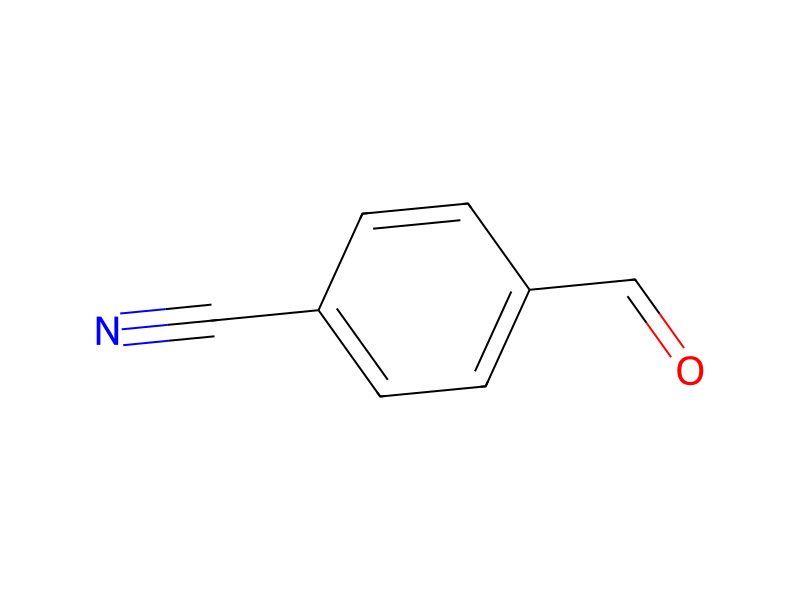
[Br-].[CH2:2]([C@H:5]1[CH2:10][CH2:9][C@H:8]([CH2:11][P+](C2C=CC=CC=2)(C2C=CC=CC=2)C2C=CC=CC=2)[CH2:7][CH2:6]1)[CH2:3][CH3:4].CC([O-])(C)C.[K+].[C:37]([C:39]1[CH:46]=[CH:45][C:42]([CH:43]=O)=[CH:41][CH:40]=1)#[N:38].O>O1CCCC1>[CH2:2]([C@H:5]1[CH2:10][CH2:9][C@H:8]([CH:11]=[CH:43][C:42]2[CH:45]=[CH:46][C:39]([C:37]#[N:38])=[CH:40][CH:41]=2)[CH2:7][CH2:6]1)[CH2:3][CH3:4]To a mixture of 25.0 g (0.11 mol) of trans-4-propylcyclohexylmethyltriphenylphosphonium bromide and 100 ml of tetrahydrofuran (THF) was added 12.2 g (0.10 mol) of t-BuOK while maintaining a temperature of lower than −20° C., and stirred for 1 hour. Subsequently, 70 ml of solution of 12.9 g (0.10 mol) of 4-cyanobenzaldehyde in THF was added dropwise to the solution while maintaining a temperature of lower than −20° C., and stirred at the same temperature for 2 hours to react. After finishing of the reaction, 50 ml of water was added to the reaction product and then extracted with 100 ml of toluene. The organic layer thus obtained was washed with water thrice and then dried over anhydrous magnesium sulfate. The solvent was distilled off under a reduced pressure, and the residue was subjected to silica gel column chromatography (eluent: toluene) to obtain 12.1 g of a crude 4-(2-(trans-4-propylcyclohexyl)vinyl)benzonitrile.
Wird geladen…