StartseiteMCPWorkbenchSkills
StartseiteWorkbenchBenachrichtigungenMein Bereich
llms.txt · MCP-AnleitungDatenschutz · Nutzungsbedingungen · Supportv1.8.3
  1. Startseite
  2. /Reaktion

Ammonium Chloride → (S)-N-Boc-2-ethynylpyrrolidine

HRID 1270897
Drucken

Reaktionsgleichung

Reaktionsgleichung von HRID 1270897
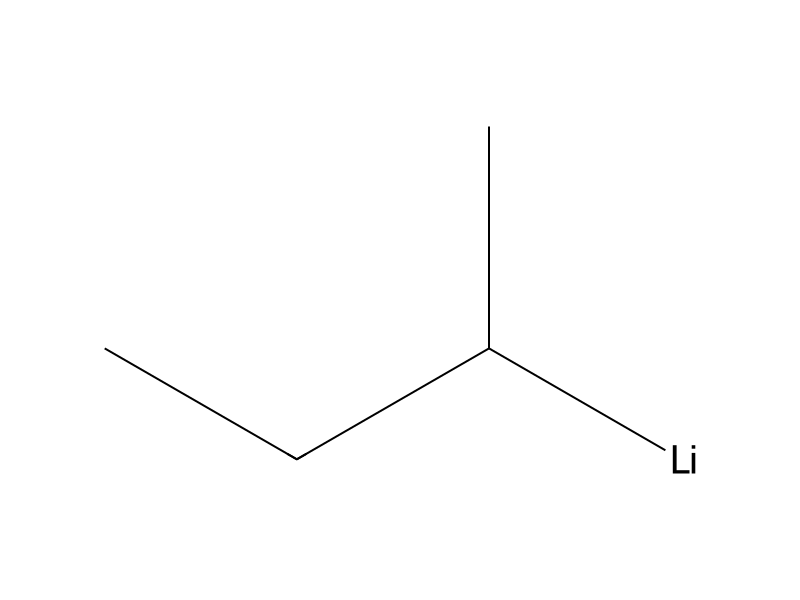
Br[C:2](Br)=[CH:3][C@@H:4]1[CH2:8][CH2:7][CH2:6][N:5]1[C:9]([O:11][C:12]([CH3:15])([CH3:14])[CH3:13])=[O:10].C([Li])(CC)C.[Cl-].[NH4+]>C1COCC1.CCOCC>[C:3]([C@@H:4]1[CH2:8][CH2:7][CH2:6][N:5]1[C:9]([O:11][C:12]([CH3:15])([CH3:14])[CH3:13])=[O:10])#[CH:2]
KomponentenReaktionsbedingungenVersuchsvorschriftAufarbeitungQuellen und NachweiseNotizen zur Reaktion

Komponenten

6

Edukt 3

HCID 25517Ammonium ChlorideHCID 14730281(S)-t-butyl 2-(2,2-dibromovinyl)pyrrolidine-1-carboxylateHCID 178418400CID 53628100

Produkt 1

HCID 11030701(S)-N-Boc-2-ethynylpyrrolidine

Reagenzien, Katalysatoren, Lösungsmittel 2

HCID 3283Diethyl EtherLösungsmittel
HCID 8028
Tetrahydrofuran
Lösungsmittel

Reaktionsbedingungen

Temperatur
-78 °C

Versuchsvorschrift

A solution of Example 538A (6.11 g, 17.21 mmol) in THF (150 mL) at −78° C. was treated with sec-butyl lithium (24.6 mL, 34.41 mmol) dropwise via syringe and stirred for 30 minutes at −78° C. The solution was then treated with a saturated ammonium chloride solution (100 mL), allowed to warm to room temperature, diluted with ether and extracted. The combined organic layers were washed with brine, dried (MgSO4) and concentrated to provide the desired product in quantitative yield. MS (ESI(+)) m/e 196 (M+H)+.

Aufarbeitung

  1. temperatureto warm to room temperature
  2. extractionextracted
  3. washThe combined organic layers were washed with brine
  4. dry with materialdried (MgSO4)
  5. concentrationconcentrated

Quellen und Nachweise

ORD-Eintrag
ord-b3849241dc1c4b1c9e37926c2acc9984
Quelldatensatz
uspto-grants-2007_04
DOI
10.6084/m9.figshare.5104873.v1
Patentnummer
US07202363B2

Notizen zur Reaktion

Auf dieser SeiteKomponentenReaktionsbedingungenVersuchsvorschriftAufarbeitungQuellen und NachweiseNotizen zur Reaktion