StartseiteMCPWorkbenchSkills
StartseiteWorkbenchBenachrichtigungenMein Bereich
llms.txt · MCP-AnleitungDatenschutz · Nutzungsbedingungen · Supportv1.8.3
  1. Startseite
  2. /Reaktion

Phenyl Isothiocyanate → N-(2-methoxy-4-pyridyl)-N'-phenylthiourea

HRID 1277815
Drucken

Reaktionsgleichung

Reaktionsgleichung von HRID 1277815
[C:1]1([N:7]=[C:8]=[S:9])[CH:6]=[CH:5][CH:4]=[CH:3][CH:2]=1.[CH3:10][O:11][C:12]1[CH:17]=[C:16]([NH2:18])[CH:15]=[CH:14][N:13]=1>CC(C)=O>[CH3:10][O:11][C:12]1[CH:17]=[C:16]([NH:18][C:8]([NH:7][C:1]2[CH:6]=[CH:5][CH:4]=[CH:3][CH:2]=2)=[S:9])[CH:15]=[CH:14][N:13]=1
KomponentenVersuchsvorschriftAufarbeitungQuellen und NachweiseNotizen zur Reaktion

Komponenten

4

Edukt 2

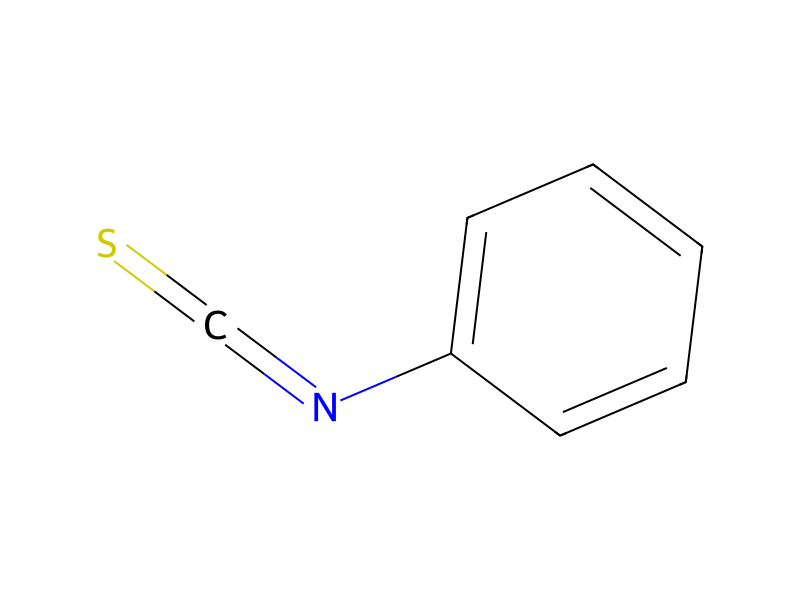
HCID 7673Phenyl IsothiocyanateHCID 2808912-Methoxypyridin-4-amine

Produkt 1

HCID 12897235N-(2-methoxy-4-pyridyl)-N'-phenylthioureaAusbeute 33,4 %

Reagenzien, Katalysatoren, Lösungsmittel 1

HCID 180AcetoneLösungsmittel

Versuchsvorschrift

203 mg (1.5 mmol) of phenyl isothiocyanate was added to a solution of 186 mg (1.5 mmol) of 2-methoxy-4-aminopyridine in 15 ml of dry acetone. The mixture was then refluxed for 33 hrs. After cooling, solvent was evaporated off by distillation and the residue was chromatographed in a conventional manner using silica gel (solvent, CHCl3 :acetone=10:1 volume). Fractions were collected and solvent removed by distillation. The residue was recrystallized from ether to give the desired product having a melting point of 138°-141° C. in an amount of 130 mg (yield 33.4%).

Aufarbeitung

  1. temperatureThe mixture was then refluxed for 33 hrs
  2. temperatureAfter cooling
  3. customsolvent was evaporated off by distillation
  4. customthe residue was chromatographed in a conventional manner
  5. customFractions were collected
  6. customsolvent removed by distillation
  7. customThe residue was recrystallized from ether

Quellen und Nachweise

ORD-Eintrag
ord-8791cadafdc14b6bacb5a5191fcfd252
Quelldatensatz
uspto-grants-1981_07
DOI
10.6084/m9.figshare.5104873.v1
Patentnummer
US04279639

Notizen zur Reaktion

Auf dieser SeiteKomponentenVersuchsvorschriftAufarbeitungQuellen und NachweiseNotizen zur Reaktion