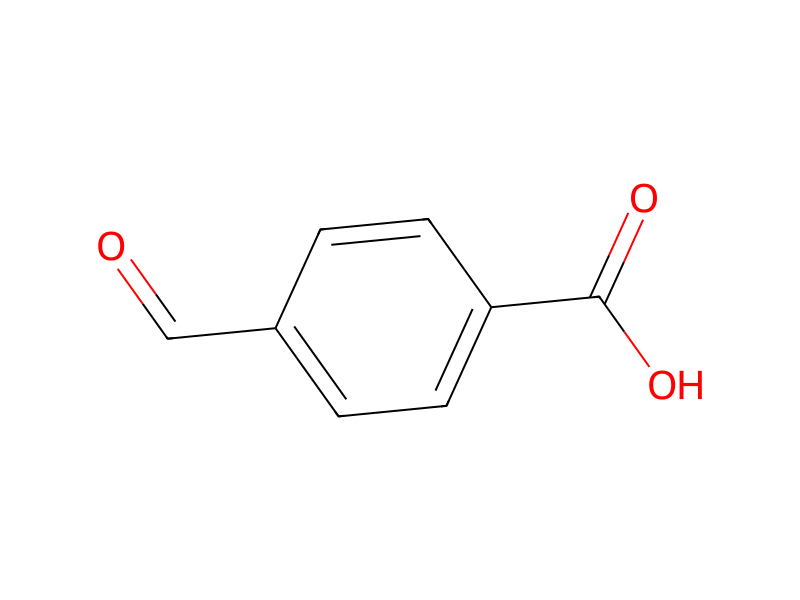
A stirred solution of 2.24 g (0.01 mole) of 2-(p-tolyl)benzothiophene and 2.25 g (0.01 mole) of the anil derivative of terephthalaldehydic acid in 150 ml of freshly distilled, dry dimethylformamide was flushed with nitrogen for 10 minutes. The solution was heated to 35°C and 6.72 g (0.06 mole) of potassium tert-but-oxide was added. The color of the reaction mixture changed from violet to brown. Analysis of an aliquot by ultraviolet spectroscopy showed that the reaction was completed after 2 hours of stirring. Glacial acetic acid was added in amount sufficient to neutralize excess potassium tert-butoxide, and the reaction mixture was heated to reflux and filtered while hot to collect the resulting precipitate. The filter cake was washed with hot dimethylformamide containing two percent aniline, then slurried in hot ten percent aqueous hydrochloric acid and refiltered. The collected precipitate was washed on the filter with water until free of acid and then dried in vacuo. The product was finally purified by sublimation to obtain 2-[4-(4-carboxystyryl)phenyl]benzothiophene which remained unmelted at 350°C. The wavelength of maximum excitation of this compound was 367 nm and the wavelength of maximum emission was 423 nm.