N,N-Dimethyl-1,3-propanediamine → N-[3-(dimethylamino)propyl]-3-hydroxynaphthalene-2-carboxamide
Reaktionsgleichung

[OH:1][C:2]1[C:11]([C:12]([O:14]C)=O)=[CH:10][C:9]2[C:4](=[CH:5][CH:6]=[CH:7][CH:8]=2)[CH:3]=1.[CH3:16][N:17]([CH2:19][CH2:20][CH2:21][NH2:22])[CH3:18]>C1(C)C=CC=CC=1>[CH3:16][N:17]([CH3:18])[CH2:19][CH2:20][CH2:21][NH:22][C:12]([C:11]1[C:2]([OH:1])=[CH:3][C:4]2[C:9](=[CH:8][CH:7]=[CH:6][CH:5]=2)[CH:10]=1)=[O:14]Komponenten
4
Edukt 2
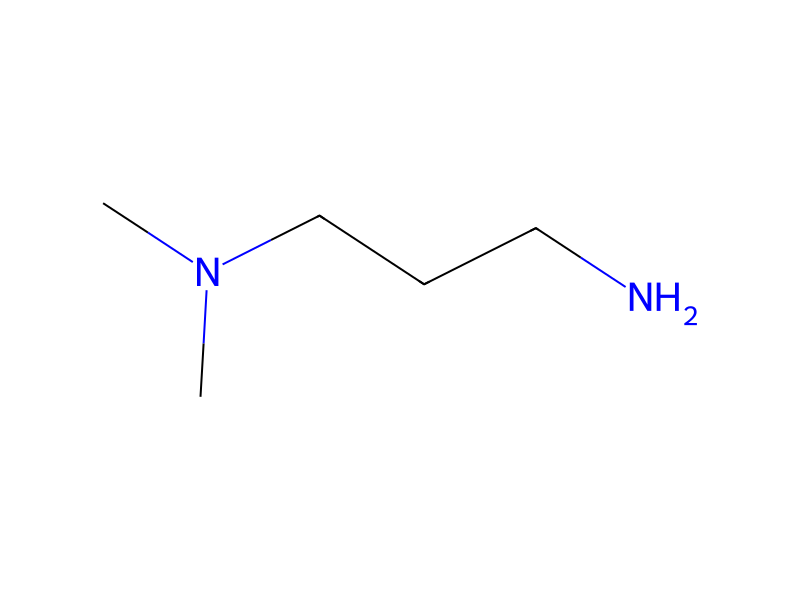

Produkt 1

Reagenzien, Katalysatoren, Lösungsmittel 1

Versuchsvorschrift
The coupling component used in this Example was obtained by reacting methyl 2-hydroxy-3-naphthoate with dimethylamino propylamine in toluene to obtain N,N-dimethyl-N-3-(3-hydroxy-2-naphthamido)propylamine, and converting the amide compound isolated by filtration, with dimethylsufuric acid in methanol, to a quaternary ammonium form. Further, the amide compound may also be readily prepared via 2-hydroxy-3-napthoic acid chloride.