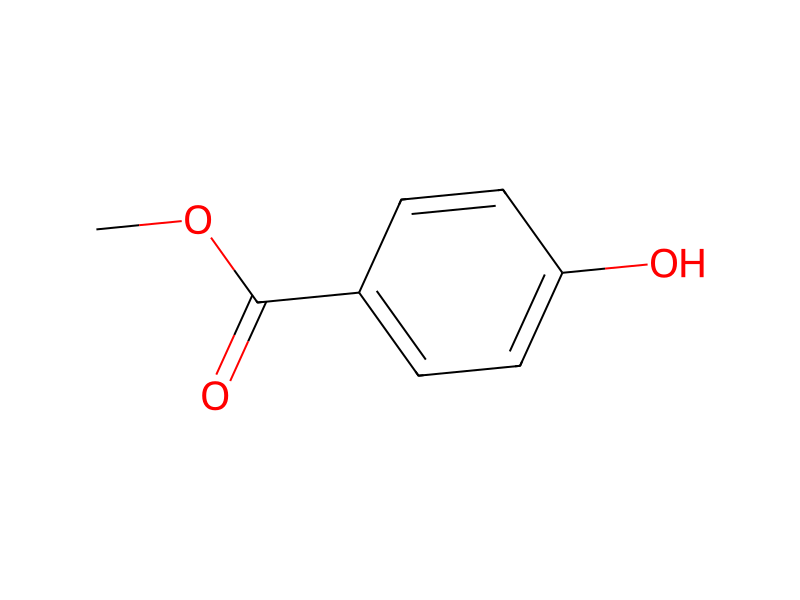
[OH:1][C:2]1[CH:11]=[CH:10][C:5]([C:6]([O:8]C)=[O:7])=[CH:4][CH:3]=1.Cl.[Cl:13][CH2:14][CH2:15][N:16]1[CH2:21][CH2:20][CH2:19][CH2:18][CH2:17]1.C(=O)([O-])[O-].[K+].[K+].C(OCC)(=O)C>O>[ClH:13].[N:16]1([CH2:15][CH2:14][O:1][C:2]2[CH:11]=[CH:10][C:5]([C:6]([OH:8])=[O:7])=[CH:4][CH:3]=2)[CH2:21][CH2:20][CH2:19][CH2:18][CH2:17]1To a 250 mL 3 neck flask with mechanical stirring and condenser, and a heating apparatus consisting of an RTD probe in the flask hooked via a temperature controller to a heating mantle and under nitrogen atmosphere, the following was added: 7.61 g of methyl 4-hydroxybenzoate, 11.05 g of β-chloroethyl-piperidine hydrochloride, 16.59 g of powdered potassium carbonate and 60 mL of ethyl acetate. The mixture was heated slowly to reflux. After overnight reflux, the mixture was cooled to ambient temperature, after which 60 mL of deionized water was added. The aqueous layer was separated and discarded. The organic layer was extracted with 4N hydrochloride (3 aliquots of 20 mL). The combined acid extracts were heated to reflux. After 1 hour at reflux, HPLC indicated the saponification to be 609 complete. After 4 hours, the reaction was near 100% complete. The mixture was cooled to 0° C.-5° C. and stirred. The resulting crystals were filtered, rinsed with acetone and dried.