Reaktionsgleichung

[Br:1][C:2]1[CH:3]=[C:4]([CH:10]=O)[S:5][C:6]=1[N+:7]([O-:9])=[O:8].C(O)C.N1C=CC=CC=1.Cl.[NH2:22][OH:23]>CCCCCCC.CCOC(C)=O>[Br:1][C:2]1[CH:3]=[C:4]([CH:10]=[N:22][OH:23])[S:5][C:6]=1[N+:7]([O-:9])=[O:8]Komponenten




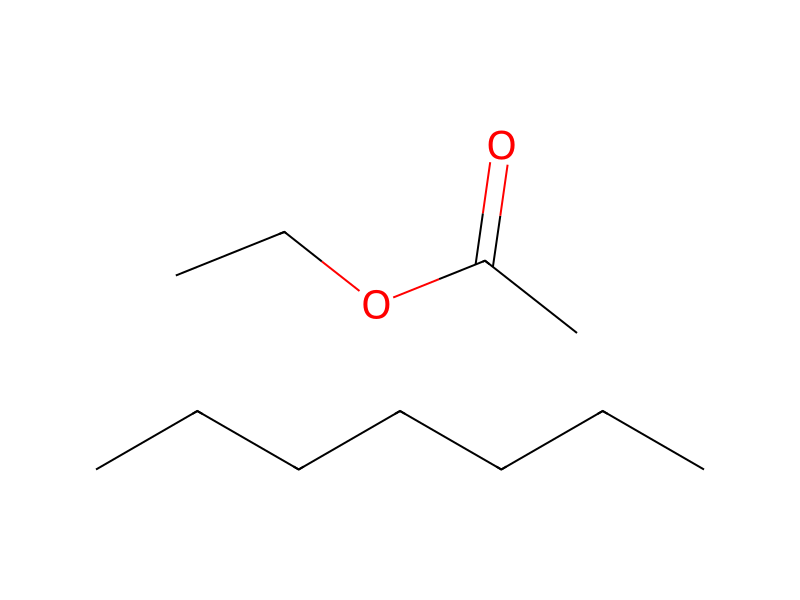
Reaktionsbedingungen
- Temperatur
- 80 °C
Versuchsvorschrift
A 12-L three neck, round bottom flask equipped with mechanical stirring, a temperature probe and a reflux condenser was charged with 4-Bromo-5-nitro-thiophene-2-carbaldehyde (Example 25: step b, 426.0 g, 1.805 mol), absolute ethanol (4L) and pyridine (189.9 mL, 2.35 mol). Hydroxylamine hydrochloride (163.3 g, 2.35 mol) was added in one portion and the mixture was heated. The mixture became a slurry at 27° C., turned clear at 50° C. and was refluxed at 80° C. for 1.5 hour. TLC analysis showed reaction completion (2:1 heptane/EtOAc). The cooled reaction mixture was concentrated in vaccuo then dried azeotrophically using toluene (1L). The resulting moist solids were transferred to a 10-L glass carboy and stirred with H2O (3L). After 1 hour, the solids were isolated by filtration, rinsed with H2O (3L) and heptane (3L), then dried in vacuum oven to give the desired title compound as a brown powder (441.65 g, 97%). 1H-NMR (DMSO): δ 13.0 (1H, br s), 8.1 (1H, s), 7.8 (1H, s).
Aufarbeitung
- temperaturethe mixture was heated
- customat 27° C.
- customturned clear at 50° C.
- customThe cooled reaction mixture
- concentrationwas concentrated in vaccuo
- dry with materialthen dried azeotrophically using toluene (1L)
- customthe solids were isolated by filtration
- washrinsed with H2O (3L) and heptane (3L)
- customdried in vacuum oven
Quellen und Nachweise
- ORD-Eintrag
- ord-999775abc284420c80748a857f21ae39
- Quelldatensatz
- uspto-grants-2008_06
- Patentnummer
- US07385066B2
Verknüpfte Notizen
Wird geladen…