Reaktionsgleichung

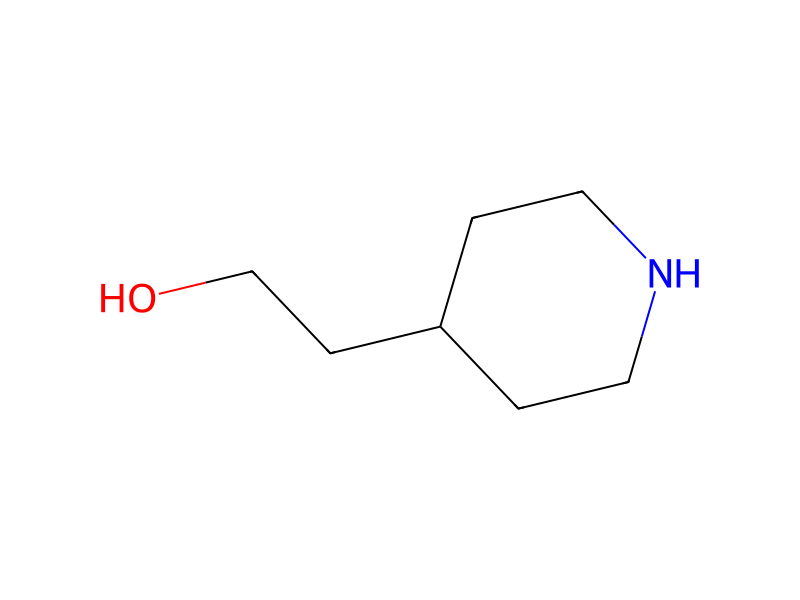
Cl[C:2]1[CH:11]=[CH:10][C:9]2[C:4](=[CH:5][CH:6]=[C:7]([Cl:12])[CH:8]=2)[N:3]=1.[NH:13]1[CH2:18][CH2:17][CH:16]([CH2:19][CH2:20][OH:21])[CH2:15][CH2:14]1>>[Cl:12][C:7]1[CH:8]=[C:9]2[C:4](=[CH:5][CH:6]=1)[N:3]=[C:2]([N:13]1[CH2:18][CH2:17][CH:16]([CH2:19][CH2:20][OH:21])[CH2:15][CH2:14]1)[CH:11]=[CH:10]2Komponenten
3


Versuchsvorschrift
The process is performed as described in Example 4 (step 4.1). Starting with 2 g (10.10 mmol) of 2,6-dichloroquinoline and 1.44 g (11.10 mmol) of 2-(4-piperidyl)ethanol, and after chromatography on silica gel, eluting with a 98/2 mixture of dichloromethane and methanol, 2.54 g of pure product are obtained in the form of a white solid.
Aufarbeitung
- washafter chromatography on silica gel, eluting with a 98/2 mixture of dichloromethane and methanol, 2.54 g of pure product
- customare obtained in the form of a white solid
Quellen und Nachweise
- ORD-Eintrag
- ord-3a92dc86b6ff4b31a1a564e77d29ddeb
- Quelldatensatz
- uspto-grants-2007_05
- Patentnummer
- US07214798B2
Verknüpfte Notizen
Wird geladen…