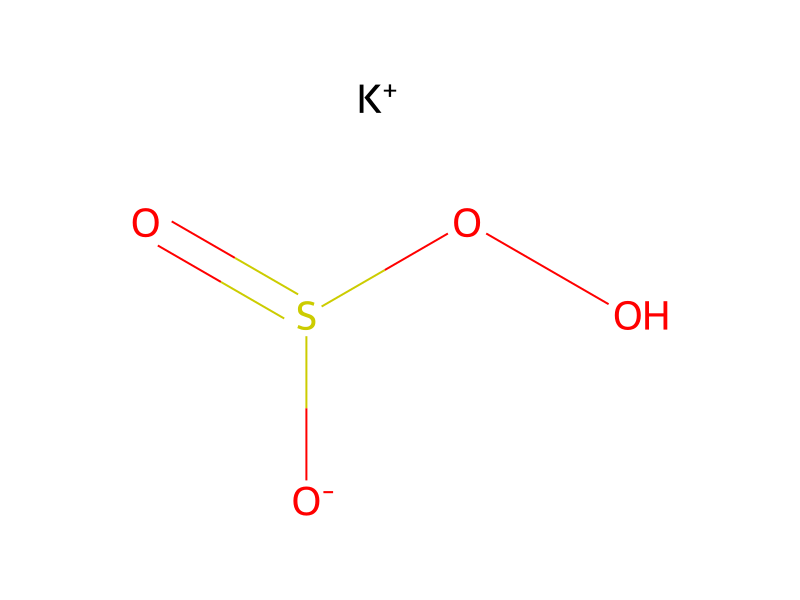
O.[CH2:2]([C:4]1[C:8]([O:9][C:10]2[CH:11]=[C:12]([C:18]#[N:19])[CH:13]=[C:14]([CH:17]=2)[C:15]#[N:16])=[C:7]([CH2:20][CH2:21][O:22][C:23]2[CH:28]=[CH:27][C:26]([S:29][CH3:30])=[CH:25][CH:24]=2)[NH:6][N:5]=1)[CH3:3].[OH:31]OS([O-])=O.[K+]>ClCCl>[CH2:2]([C:4]1[C:8]([O:9][C:10]2[CH:11]=[C:12]([C:18]#[N:19])[CH:13]=[C:14]([CH:17]=2)[C:15]#[N:16])=[C:7]([CH2:20][CH2:21][O:22][C:23]2[CH:24]=[CH:25][C:26]([S:29]([CH3:30])=[O:31])=[CH:27][CH:28]=2)[NH:6][N:5]=1)[CH3:3]Wet alumina was prepared by adding water (1 ml) to Brockman grade I alumina (5 g). A sample of this material (160 mg) was added to a stirred solution of the sulfide from Example 1 (106 mg, 0.16 mmol) in dichloromethane (1 ml), followed by oxone (98 mg, 0.16 mmol). The reaction mixture was heated at reflux for 45 minutes, before being filtered. The solids were washed with dichloromethane (10 ml) and the combined organics were concentrated under reduced pressure. The crude product mixture was purified by flash chromatography on silica gel eluting with dichloromethane:methanol (100:0, 98:2 and 96:4, by volume) to give the title compound as a colourless oil (25 mg).