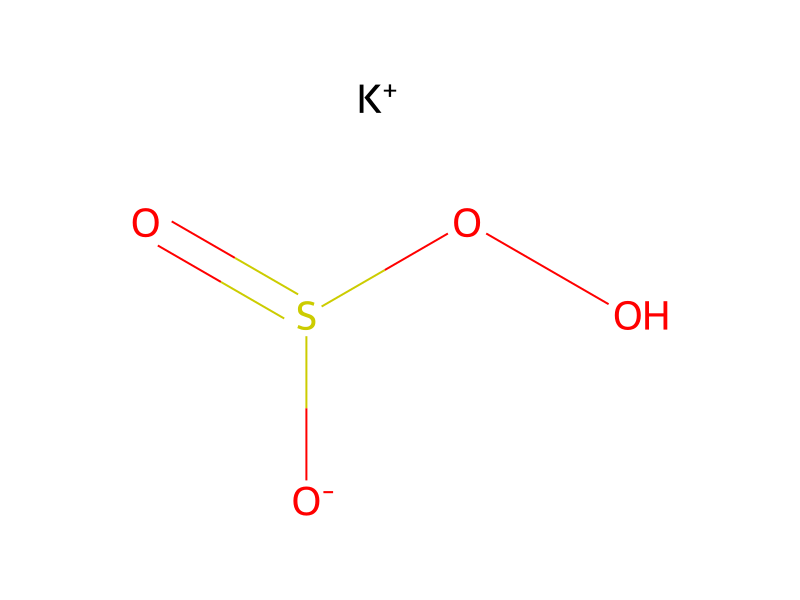
[CH2:1]([C:3]1[C:7]([O:8][C:9]2[CH:10]=[C:11]([C:17]#[N:18])[CH:12]=[C:13]([CH:16]=2)[C:14]#[N:15])=[C:6]([CH2:19][CH2:20][O:21][C:22]2[CH:27]=[CH:26][C:25](SC)=[CH:24][CH:23]=2)[NH:5][N:4]=1)[CH3:2].O[O:31][S:32]([O-:34])=O.[K+].[CH3:36]O>O>[CH2:1]([C:3]1[C:7]([O:8][C:9]2[CH:16]=[C:13]([C:14]#[N:15])[CH:12]=[C:11]([CH:10]=2)[C:17]#[N:18])=[C:6]([CH2:19][CH2:20][O:21][C:22]2[CH:23]=[CH:24][C:25]([S:32]([CH3:36])(=[O:34])=[O:31])=[CH:26][CH:27]=2)[NH:5][N:4]=1)[CH3:2]To a stirred solution of the sulfide from Example 1 (90 mg, 0.22 mmol) in methanol (2 ml) at 0° C. was added a solution of oxone (205 mg, 0.33 mmol) in water (2 ml). The viscous suspension was further diluted with methanol (2 ml). After 4 hours the reaction mixture was concentrated under reduced pressure and the residue was partitioned between dichloromethane (20 ml) and water (20 ml). The organic layer was dried over magnesium sulfate, filtered and concentrated under reduced pressure. The crude product mixture was purified by flash chromatography on silica gel eluting with pentane:ethyl acetate (50:50, by volume) to give the title compound (70 mg) as a white powder, m.p. 88–90° C.