Stannous Chloride → HCID 146733, Verbindung
Reaktionsgleichung

[N+:1]([C:4]1[CH:25]=[CH:24][C:7]([CH:8]=[CH:9][C:10]2[C:11]3[C:16]([N:17]=[C:18]4[C:23]=2[CH:22]=[CH:21][CH:20]=[CH:19]4)=[CH:15][CH:14]=[CH:13][CH:12]=3)=[CH:6][CH:5]=1)([O-])=O.[Sn](Cl)Cl>C(OCC)(=O)C.C(O)C>[NH2:1][C:4]1[CH:25]=[CH:24][C:7]([CH:8]=[CH:9][C:10]2[C:23]3[C:18]([N:17]=[C:16]4[C:11]=2[CH:12]=[CH:13][CH:14]=[CH:15]4)=[CH:19][CH:20]=[CH:21][CH:22]=3)=[CH:6][CH:5]=1Komponenten
Edukt 2
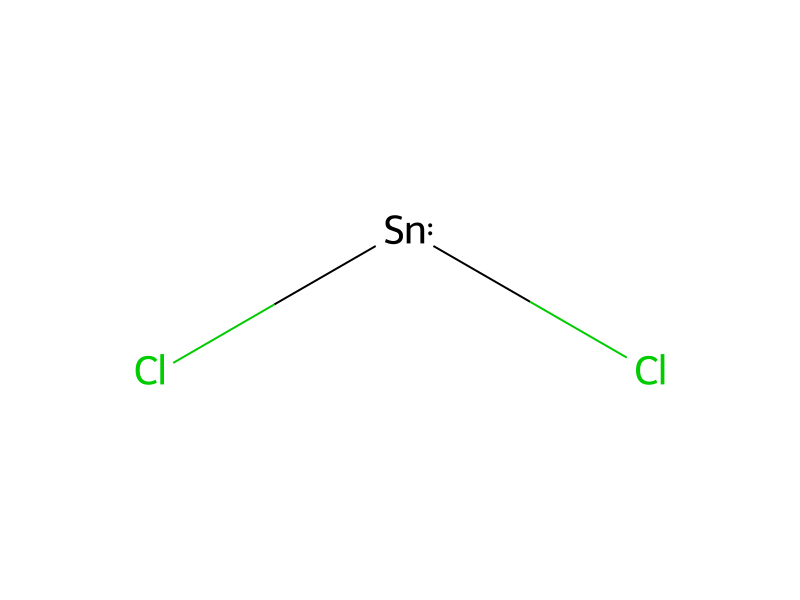

Produkt 1

Reagenzien, Katalysatoren, Lösungsmittel 2


Versuchsvorschrift
The 9-(4-nitrostyryl)acridine product (2.86 g, 10.0 mmol) is dissolved in ethyl acetate (250 ml) and then brought to reflux. A solution of tin(II) chloride dehydrate (9.0 g, 40 mmol) in hot ethanol (150 ml) is cooled and added to the solution of 9-(4-nitrostyryl)acridine. The mixture is reacted under reflux and with stirring for 5 hours. After cooling, the 9-(4-aminostyryl)acridine precipitates and is isolated by filtration under vacuum. The filtrate is dried by evaporation and taken up in water (500 ml) with stirring. The solution is basified (pH 13–14) with a sodium hydroxide solution. The 9-(4-aminostyryl)acridine fraction previously isolated, which contains a high proportion of tin salt, is also basified. The 9-(4-aminostyryl)acridine is separated by filtration, washed with water and dried. It is sufficiently pure for the following step.
Aufarbeitung
- temperatureto reflux
- customThe mixture is reacted
- temperatureunder reflux
- temperatureAfter cooling
- customthe 9-(4-aminostyryl)acridine precipitates
- customis isolated by filtration under vacuum
- customThe filtrate is dried by evaporation
- stirringwith stirring
Quellen und Nachweise
- ORD-Eintrag
- ord-5699240b52254bce8e67decfb3b46acb
- Quelldatensatz
- uspto-grants-2007_05
- Patentnummer
- US07223865B2
Notizen zur Reaktion
Wird geladen…