StartseiteMCPWorkbenchSkills
StartseiteWorkbenchBenachrichtigungenMein Bereich
llms.txt · MCP-AnleitungDatenschutz · Nutzungsbedingungen · Supportv1.8.0
  1. Startseite
  2. /Reaktion

Diisopropylethylamine → (R)-3-{4-[2-(2-o-tolylamino-3H-benzimidazol-5-yl)acetylamino]phenyl}butanoic acid dihydrate

HRID 1357851
Notizen
Druckvorschau

Reaktionsgleichung

Reaktionsgleichung von HRID 1357851
[C:1]1([CH3:33])[CH:6]=[CH:5][CH:4]=[CH:3][C:2]=1[NH:7][C:8]1[O:9][C:10]2[CH:16]=[C:15]([CH2:17][C:18]([NH:20][C:21]3[CH:26]=[CH:25][C:24]([C@H:27]([CH3:32])[CH2:28][C:29]([OH:31])=[O:30])=[CH:23][CH:22]=3)=[O:19])[CH:14]=[CH:13][C:11]=2[N:12]=1.F[P-](F)(F)(F)(F)F.[N:41]1([O:50]C(N(C)C)=[N+](C)C)C2N=CC=CC=2N=N1.C(N(C(C)C)CC)(C)C>CN(C)C=O>[OH2:9].[OH2:50].[C:1]1([CH3:33])[CH:6]=[CH:5][CH:4]=[CH:3][C:2]=1[NH:7][C:8]1[NH:41][C:10]2[CH:16]=[C:15]([CH2:17][C:18]([NH:20][C:21]3[CH:22]=[CH:23][C:24]([C@H:27]([CH3:32])[CH2:28][C:29]([OH:31])=[O:30])=[CH:25][CH:26]=3)=[O:19])[CH:14]=[CH:13][C:11]=2[N:12]=1
KomponentenVersuchsvorschriftAufarbeitungQuellen und NachweiseNotizen zur Reaktion

Komponenten

5

Edukt 3

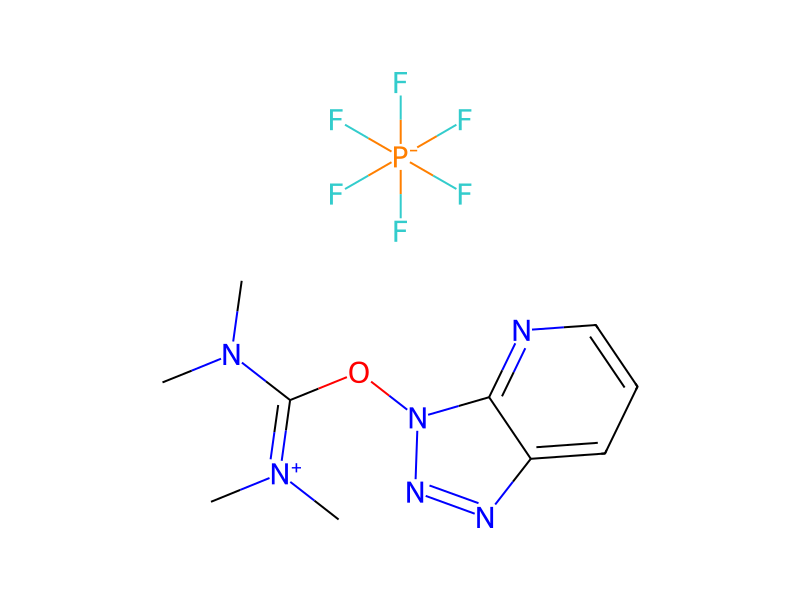
HCID 81531DiisopropylethylamineHCID 9886157Methanaminium, N-((dimethylamino)(3H-1,2,3-triazolo(4,5-b)pyridin-3-yloxy)methylene)-N-methyl-, hexafluorophosphate(1-) (1:1)HCID 695332723(R)-{4-[2-(2-o-tolylaminobenzoxazol-6-yl)acetylamino]phenyl}butanoic acid

Produkt 1

HCID 69532798(R)-3-{4-[2-(2-o-tolylamino-3H-benzimidazol-5-yl)acetylamino]phenyl}butanoic acid dihydrateAusbeute 26,5 %

Reagenzien, Katalysatoren, Lösungsmittel 1

HCID 6228DimethylformamideLösungsmittel

Versuchsvorschrift

A solution of 2-(2-o-tolylamino)benzimidazole-5-acetic acid hydrochloride (200 mg, Reference Example 7), ethyl (R)-3-(4-aminophenyl)butanoate (147 mg, Reference Example 1) and O-(7-azabenzotriazol-1-yl)-1,1,3,3-tetramethyluronium hexafluorophosphate (300 mg) in dimethylformamide (5 mL) was treated with diisopropylethylamine (470 mg). After stirring at room temperature for 2 hours the reaction mixture was partitioned between ethyl acetate and dilute aqueous acetic acid. The layers were separated and the organic layer was washed with 5% aqueous sodium bicarbonate solution, then dried, and then evaporated. The yellow semi-solid residue (120 mg) was dissolved in ethanol (5 mL) and the solution was treated with aqueous lithium hydroxide solution (2 mL, 2M). After standing at room temperature for 2 hours the mixture was acidified by addition of dilute acetic acid. The resulting white solid was collected by filtration, and sucked dry in the filter funnel to give the title compound (42 mg) as a white amorphous solid. LC-MS: RT=2.29 minutes (100% by ELSD); MS (ES+), 443 (MH+).

Aufarbeitung

  1. customwas partitioned between ethyl acetate and dilute aqueous acetic acid
  2. customThe layers were separated
  3. washthe organic layer was washed with 5% aqueous sodium bicarbonate solution
  4. customdried
  5. customevaporated
  6. dissolutionThe yellow semi-solid residue (120 mg) was dissolved in ethanol (5 mL)
  7. additionthe solution was treated with aqueous lithium hydroxide solution (2 mL, 2M)
  8. waitAfter standing at room temperature for 2 hours
  9. additionthe mixture was acidified by addition of dilute acetic acid
  10. filtrationThe resulting white solid was collected by filtration
  11. customsucked dry in the filter funnel

Quellen und Nachweise

ORD-Eintrag
ord-922ed1de3b0c42a683eedb6b50a974b5
Quelldatensatz
uspto-grants-2003_07
DOI
10.6084/m9.figshare.5104873.v1
Patentnummer
US06593354B2

Notizen zur Reaktion

Wird geladen…

Auf dieser SeiteKomponentenVersuchsvorschriftAufarbeitungQuellen und NachweiseNotizen zur Reaktion