StartseiteMCPWorkbenchSkills
StartseiteWorkbenchBenachrichtigungenMein Bereich
llms.txt · MCP-AnleitungDatenschutz · Nutzungsbedingungen · Supportv1.8.3
  1. Startseite
  2. /Reaktion

Isoprene → Trimethyl(4-methyl-1,4-cyclohexadienyl)silane

HRID 1361744
Drucken

Reaktionsgleichung

Reaktionsgleichung von HRID 1361744
[CH2:1]=[CH:2][C:3](=[CH2:5])[CH3:4].[CH3:6][Si:7]([C:10]#[CH:11])([CH3:9])[CH3:8]>ClCCl.[Zn+2].[I-].[I-].C1(P(CC)C2C=CC=CC=2)C=CC=CC=1>[CH3:6][Si:7]([CH3:9])([CH3:8])[C:10]1[CH2:11][CH:5]=[C:3]([CH3:4])[CH2:2][CH:1]=1
KomponentenReaktionsbedingungenVersuchsvorschriftAufarbeitungQuellen und NachweiseNotizen zur Reaktion

Komponenten

6

Edukt 2

HCID 6557IsopreneHCID 66111Trimethylsilylacetylene

Produkt 1

HCID 10057893Trimethyl(4-methyl-1,4-cyclohexadienyl)silaneAusbeute 91,7 %

Reagenzien, Katalysatoren, Lösungsmittel 3

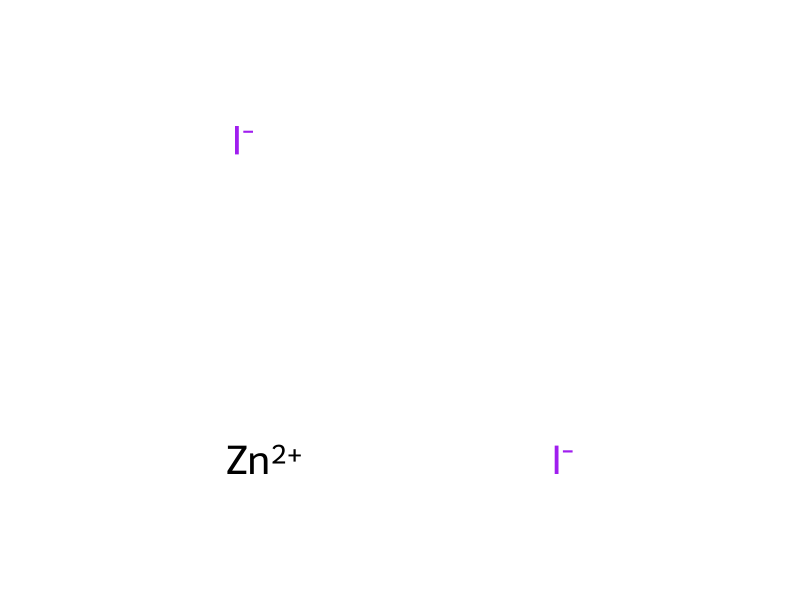
HCID 69082EthyldiphenylphosphineKatalysatorHCID 9883512Zinc(II) iodideKatalysator
HCID 6344
Dichloromethane
Lösungsmittel
2×

Reaktionsbedingungen

Temperatur
30 °C

Versuchsvorschrift

In a four-necked flask, 1.12 g (5.1 mmol) of CoBr2, 5.43 g (17 mmol) of ZnI2, and 2.24 g (5.6 mmol) of diphenylphosphinoethane were dissolved in 250 ml of dichloromethane, and the solution was stirred for 30 minutes at 30° C. Subsequently, 50 ml (500 mmol) of isoprene, 63.5 ml (450 mmol) of trimethylsilylacetylene, and 1.45 g (5.6 mmol) of Bu4NBH4 were added thereto, and the mixture was allowed to react for one hour at 30° C. After completion of the reaction, dichloromethane was evaporated, and then the residue was distilled under reduced pressure. Thus, 68.6 g of the title compound, trimethyl (4-methyl-1,4-cyclohexadienyl) silane, was obtained at a yield of 91.7% (GC purity 80%).

Aufarbeitung

  1. customto react for one hour at 30° C
  2. customwas evaporated
  3. distillationthe residue was distilled under reduced pressure

Quellen und Nachweise

ORD-Eintrag
ord-cfbae19e7385447f98a5e83478b24ce4
Quelldatensatz
uspto-grants-2011_02
DOI
10.6084/m9.figshare.5104873.v1
Patentnummer
US07880025B2

Notizen zur Reaktion

Auf dieser SeiteKomponentenReaktionsbedingungenVersuchsvorschriftAufarbeitungQuellen und NachweiseNotizen zur Reaktion