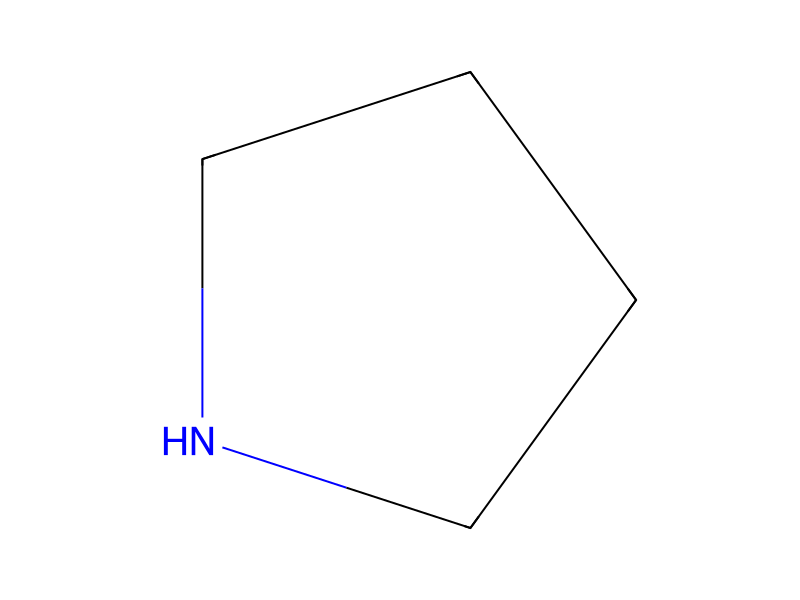
[NH2:1][C:2]1[CH:3]=[C:4]2[C:8](=[CH:9][C:10]=1[F:11])[C:7](=O)[C:6]([CH2:18][CH2:19][CH2:20][CH3:21])([CH2:13][CH2:14][C:15](=[O:17])[CH3:16])[CH2:5]2.C(O)(=O)C.N1CCCC1>C1(C)C=CC=CC=1>[NH2:1][C:2]1[CH:3]=[C:4]2[C:8]([C:7]3[C:6]([CH2:18][CH2:19][CH2:20][CH3:21])([CH2:5]2)[CH2:13][CH2:14][C:15](=[O:17])[CH:16]=3)=[CH:9][C:10]=1[F:11]The diketone from step 1 (0.6 g, 2.14 mmol) was dissolved in toluene (15 mL) and treated with acetic acid (0.236 mL, 4.12 mmol) and pyrrolidine (0.344 mL, 4.12 mmol). The resulting solution was stirred and heated in an oil bath at 100° C. for 1.5 hours. After cooling to room temperature, the mixture was filtered through a pad of silica gel and the product was washed off with EtOAc. The filtrate and washings were concentrated under vacuum. The residue was purified by flash chromatography on a Biotage 40M KP-Sil column, eluting with 4:1 to 3:1 hexanes-EtOAc. The product containing fractions were evaporated under vacuum to provide 7-amino-9a-butyl-6-fluoro-1,2,9,9a-tetrahydro-3H-fluoren-3-one (0.45 g, 80%) as a yellow solid.