Ethyl formate → trans-3-(3-Cyclopentoxy-4-methoxyphenyl)-1-formyl-4-(methoxycarbonyl)pyrrolidine
HRID 1377767
Reaktionsgleichung

[CH:1]1([O:6][C:7]2[CH:8]=[C:9]([C@H:15]3[C@H:19]([C:20]([O:22][CH3:23])=[O:21])[CH2:18][NH:17][CH2:16]3)[CH:10]=[CH:11][C:12]=2[O:13][CH3:14])[CH2:5][CH2:4][CH2:3][CH2:2]1.[CH:24](OCC)=[O:25]>CCOCC>[CH:1]1([O:6][C:7]2[CH:8]=[C:9]([C@H:15]3[C@H:19]([C:20]([O:22][CH3:23])=[O:21])[CH2:18][N:17]([CH:24]=[O:25])[CH2:16]3)[CH:10]=[CH:11][C:12]=2[O:13][CH3:14])[CH2:2][CH2:3][CH2:4][CH2:5]1Komponenten
4
Edukt 2
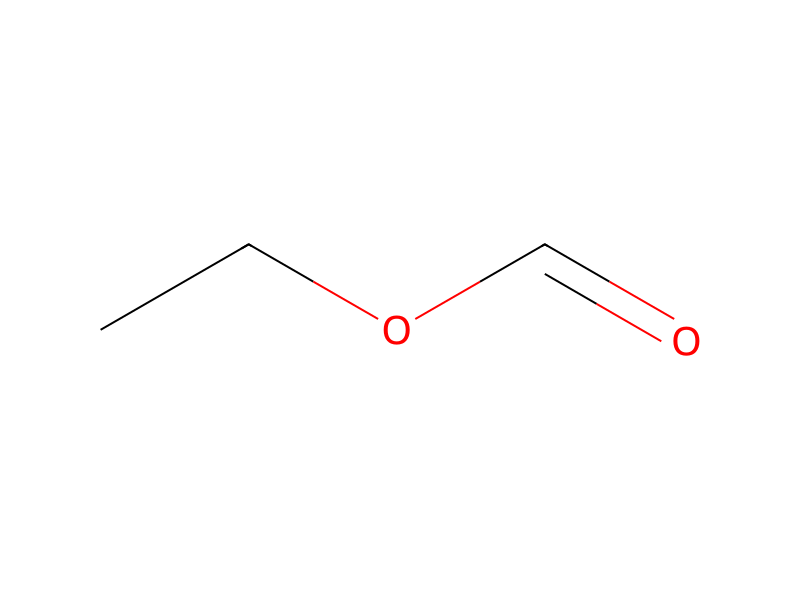

Produkt 1

Reagenzien, Katalysatoren, Lösungsmittel 1

Versuchsvorschrift
A solution of trans-3-(3-cyclopentoxy-4-methoxyphenyl)-4-(methoxycarbonyl)pyrrolidine (620 mg, 1.94 mmol) in 5 mL of ethyl formate was heated at reflux for 3 hr. The reaction was diluted with ether and concentrated. The residue was dissolved in ether and washed with 1M H3PO4. The organic layer was dried over MgSO4, filtered, and concentrated under reduced pressure. Silica gel chromatography (2:1, ethyl acetate:hexanes) provided trans-3-(3-cyclopentoxy-4-methoxyphenyl)-1-formyl-4-(methoxycarbonyl)pyrrolidine as a colorless oil (567 mg, 84%). 1H-NMR (300 MHz): δ 3.11-3.21 (1, m), 3.65 (s, 3), 3.82 (s, 3), 6.73-6.82 (m, 3), 8.26 (s, 1).