Reaktionsgleichung

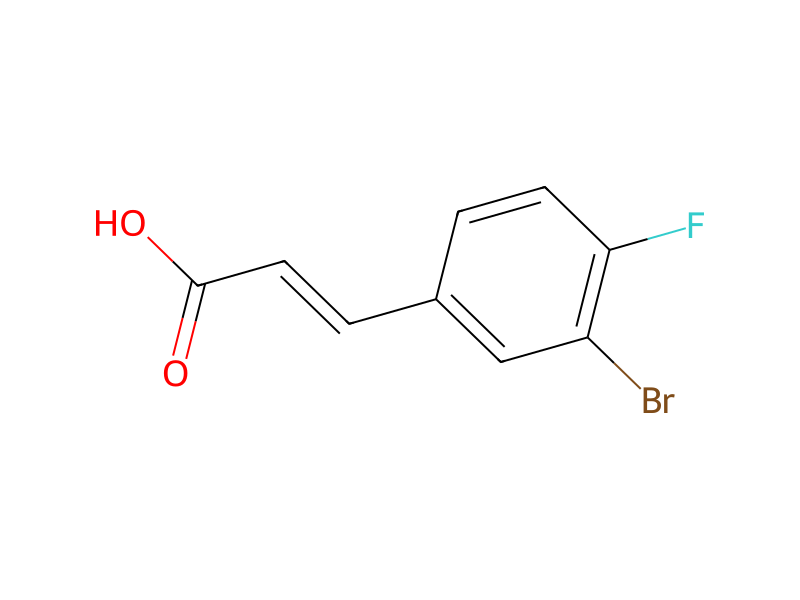
[NH2:1][C:2]1[C:3](=[O:14])[N:4]([CH2:12][CH3:13])[C:5](=[O:11])[N:6]([CH2:9][CH3:10])[C:7]=1[NH2:8].[Br:15][C:16]1[CH:17]=[C:18]([CH:24]=[CH:25][C:26]=1[F:27])[CH:19]=[CH:20][C:21](O)=O>>[Br:15][C:16]1[CH:17]=[C:18]([CH:24]=[CH:25][C:26]=1[F:27])/[CH:19]=[CH:20]/[C:21]1[NH:1][C:2]2[C:3](=[O:14])[N:4]([CH2:12][CH3:13])[C:5](=[O:11])[N:6]([CH2:9][CH3:10])[C:7]=2[N:8]=1Komponenten
3


Versuchsvorschrift
Substantially the same procedure as in Reference Example 7 was repeated using 3.00 g (15.1 mmol) of 5,6-diamino-1,3-diethyluracil and 4.08 g (16.7 mmol) of 3-bromo-4-fluorocinnamic acid. The resulting crude crystals were recrystallized from dioxane to give 2.90 g (yield 47%) of Compound k as a pale yellow powder.
Aufarbeitung
- customThe resulting crude crystals were recrystallized from dioxane
Quellen und Nachweise
- ORD-Eintrag
- ord-63a9a8f3d9604b2697b888528fb0003a
- Quelldatensatz
- uspto-grants-1997_09
- Patentnummer
- US05670498
Verknüpfte Notizen
Wird geladen…