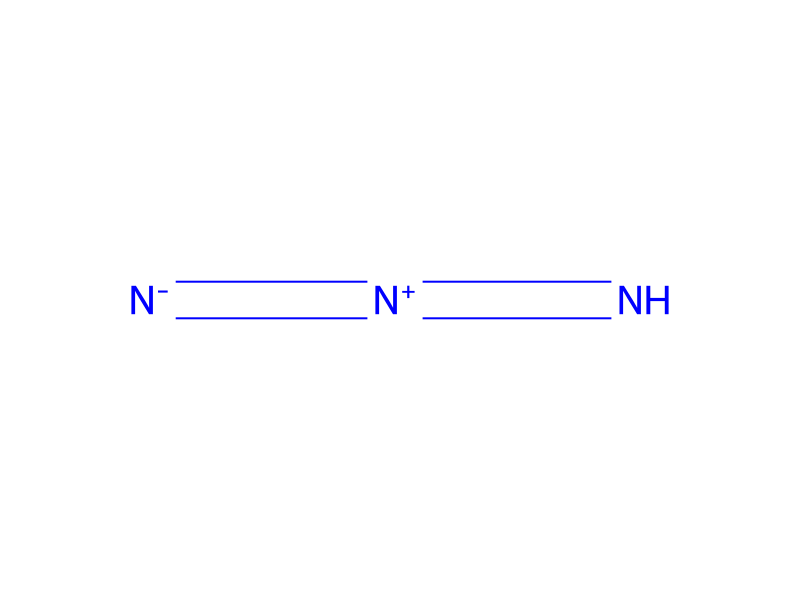
A stirred solution of N-cyclohexyl-5-chloropentanamide (4.36 g, 0.020 mol) in benzene (30 ml) at 0° C. was treated with phosphorous pentachloride (4.4 g, 0.021 mol) in portions over 10 minutes. When the addition was complete the reaction was stirred for an additional 2 hours at 18° C. The solution was then cooled to 0° C. and treated with a solution of hydrazoic acid (0.04 mol) in benzene (50 ml) (prepared according to the method described in Reagents for Organic Synthesis, Volume 1, L. F. Fieser and M. Fieser, John Wiley and Sons (New York: 1967). The resulting solution was stirred at 0° C. for an additional 1.5 hours and at 18° C. for 48 hours and then heated under reflux for an additional 3 hours. The solvent was evaporated off under reduced pressure and the resulting residue was dissolved in ethyl acetate (250 ml). The resulting solution was washed with saturated aqueous sodium hydrogen carbonate (3×100 ml), dried over anhydrous sodium sulfate, filtered, and concentrated under reduced pressure to yield a crude product. The crude product was purified by recrystallization from ethyl acetate-hexane to yield 5-(4-chlorobutyl)-1-cyclohexyl-1H-tetrazole as a colorless crystalline solid, having a melting point of 50°-51° C. and the following physical characteristics: