Phenylhydrazine → 9-Bromo-1,5-dimethyl-3-phenyl-3,5-dihydro-4H-pyridazino[4,5-b]indol-4-one
Reaktionsgleichung

[C:1]([C:4]1[C:12]2[C:7](=[CH:8][CH:9]=[CH:10][C:11]=2[Br:13])[N:6]([CH3:14])[C:5]=1[C:15]([O:17]C)=O)(=O)[CH3:2].[C:19]1([NH:25][NH2:26])[CH:24]=[CH:23][CH:22]=[CH:21][CH:20]=1>C(O)(=O)C>[Br:13][C:11]1[C:12]2[C:4]3[C:1]([CH3:2])=[N:26][N:25]([C:19]4[CH:24]=[CH:23][CH:22]=[CH:21][CH:20]=4)[C:15](=[O:17])[C:5]=3[N:6]([CH3:14])[C:7]=2[CH:8]=[CH:9][CH:10]=1Komponenten
4
Edukt 2
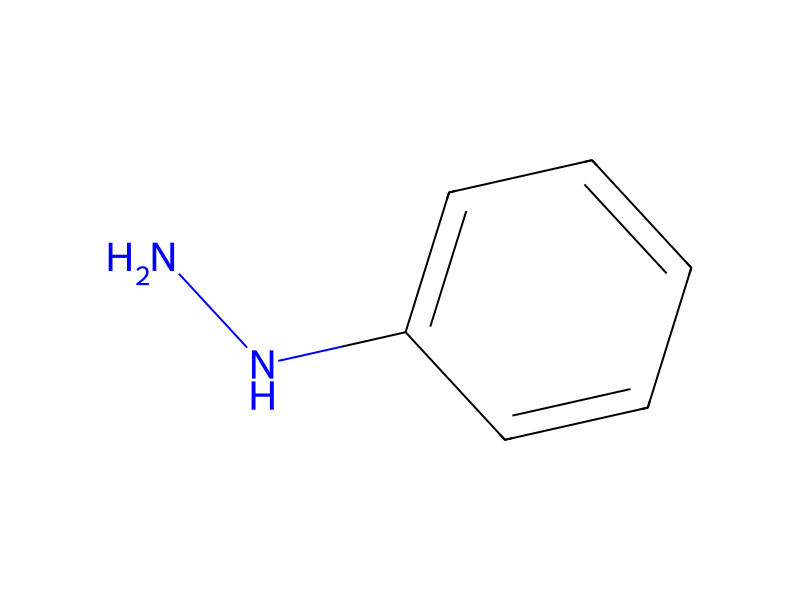

Produkt 1

Reagenzien, Katalysatoren, Lösungsmittel 1

Versuchsvorschrift
22 g (71 mmol) of methyl 3-acetyl-4-bromo-1-methyl-1H-indole-2-carboxylate are dissolved with heating in 350 ml of acetic acid. 30 ml (300 mmol) of phenylhydrazine are added, stirring is carried out for 1 h at room temperature and the reaction mixture is heated at reflux for 5 h, at room temperature for 15 h and then again at reflux for 7 h. 28 ml of phenylhydrazine are added and the process is repeated. The mixture is concentrated under reduced pressure, the residue is taken up in water and the precipitate is collected by filtration, washed with water and dried under reduced pressure. It is purified by chromatography on a column of silica gel. 11.1 g (30 mmol) of product are isolated.