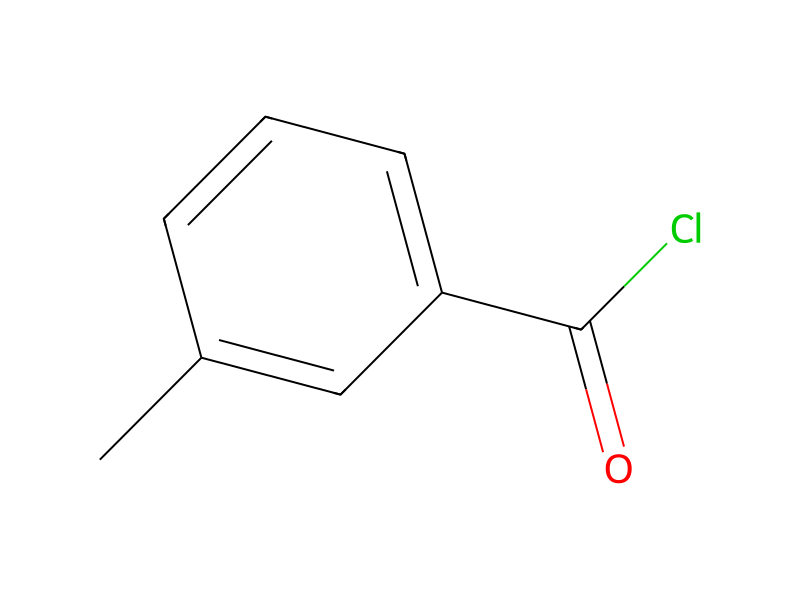
[NH2:1][C:2]1[C:3](=[O:14])[C:4]2[C:9]([C:10](=[O:13])[C:11]=1Cl)=[CH:8][CH:7]=[CH:6][CH:5]=2.[CH3:15][C:16]1[CH:17]=[C:18]([CH:22]=[CH:23][CH:24]=1)[C:19](Cl)=[O:20].S(=O)(=O)(O)O.CCOCC>O1CCOCC1>[O:14]=[C:3]1[C:2]2[N:1]=[C:19]([C:18]3[CH:22]=[CH:23][CH:24]=[C:16]([CH3:15])[CH:17]=3)[O:20][C:11]=2[C:10](=[O:13])[C:9]2[CH:8]=[CH:7][CH:6]=[CH:5][C:4]1=2To a solution of 5 g (24 mmol) of 2-amino-3-chloro-1,4-dihydro-1,4-dioxo-naphthalene in 70 mL of dioxane, one adds, with protection from light, 32.00 mL (240 mmol) of 3-methylbenzoic acid chloride; after 5 min of stirring, 0.50 mL of concentrated sulfuric acid is added. After 45 min of reflux and complete cooling, 200 mL of ether are added, and the precipitate that forms is eliminated by filtration. The red filtrate is evaporated to dryness, redissolved in dichloromethane, washed several times with water, dried and purified on a flash column (support: silica; conditioning: heptane; eluant: dichloromethane/heptane, 50/50). The yellow crystals formed after evaporation of the solvent are uncolored and recrystallized in dichloromethane to produce 3 g of 4,9-dihydro-4,9-dioxo-2-(3-methylphenyl)-naphtho[2,3-d]oxazole in the form of yellow crystals.