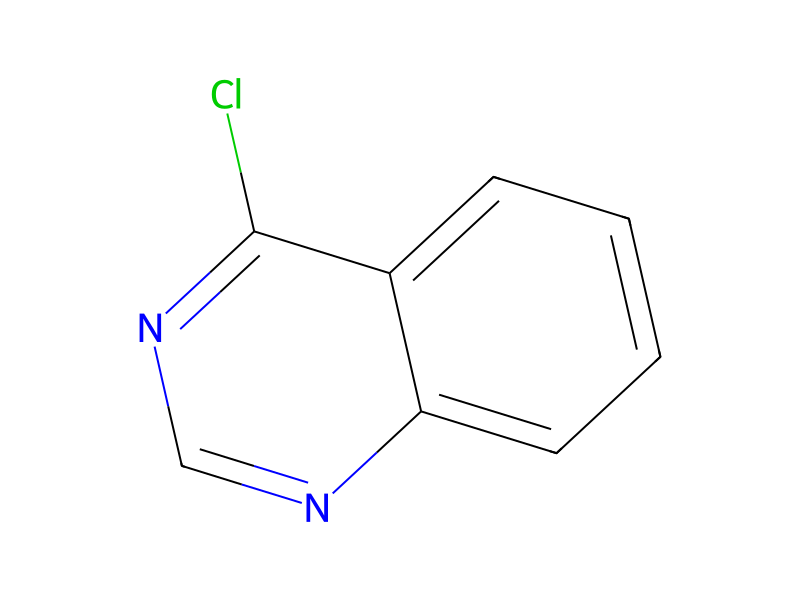
[CH2:1]([O:3][C:4]1[CH:5]=[C:6]2[C:11](=[CH:12][CH:13]=1)[CH2:10][CH:9]([OH:14])[CH2:8][CH2:7]2)[CH3:2].[H-].[Na+].Cl[C:18]1[C:27]2[C:22](=[CH:23][CH:24]=[CH:25][CH:26]=2)[N:21]=[CH:20][N:19]=1>C1COCC1.CCOCC>[CH2:1]([O:3][C:4]1[CH:5]=[C:6]2[C:11](=[CH:12][CH:13]=1)[CH2:10][CH:9]([O:14][C:18]1[C:27]3[C:22](=[CH:23][CH:24]=[CH:25][CH:26]=3)[N:21]=[CH:20][N:19]=1)[CH2:8][CH2:7]2)[CH3:2]2.57 g (13.3 mmol) of 6-ethoxytetralin-2-ol in 5 ml of THF were added, with ice-cooling, to a suspension of 400 mg of NaH (80% pure, 13.3 mmol in 40 ml of THF). The mixture was subsequently refluxed for 1 hour and cooled to room temperature, and 2.0 g (12.2 mmol) of 4-chloroquinazoline were added. The mixture was refluxed for 24 hours and cooled and then diluted with ether and washed with saturated sodium hydrogen carbonate and saturated sodium chloride solution. After the organic phase had been dried and concentrated, the residue was chromatographed on silica gel using petroleum ether/ethyl acetate (9:1, 8:2). This gave 2.39 g (61% of theory) of colorless crystals (m.p.115-117° C.).