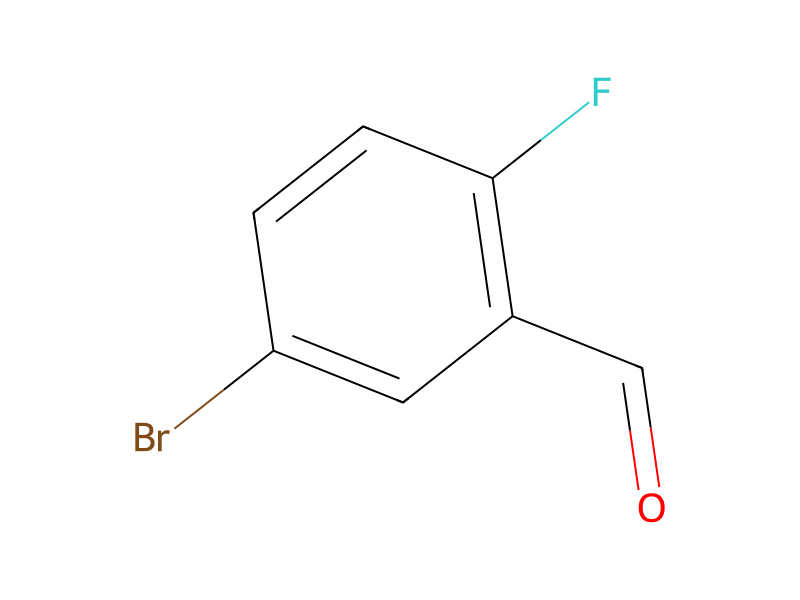
C[CH2:2][CH2:3][CH:4](N)[C:5]([O:7][C:8]([CH3:11])([CH3:10])[CH3:9])=[O:6].[Br:13][C:14]1[CH:15]=[CH:16][C:17](F)=[C:18]([CH:21]=1)[CH:19]=[O:20].C(=O)([O-])[O-].[K+].[K+].O.[CH3:30][N:31](C=O)C>>[Br:13][C:14]1[CH:15]=[CH:16][C:17]([N:31]([CH2:2][CH2:3][CH2:4][C:5]([O:7][C:8]([CH3:9])([CH3:10])[CH3:11])=[O:6])[CH3:30])=[C:18]([CH:19]=[O:20])[CH:21]=1In DMF (5.0 ml) was dissolved tert-butyl 4-methyl-aminobutyrate (1050 mg), and to the mixture was added at room temperature a solution of 5-bromo-2-fluorobenzaldehyde (1025 mg) in DMF (1.0 ml) and then potassium carbonate (837 mg). The mixture was stirred at 70° C. for 60 hours, and to the mixture was added at room temperature water (50 ml). The mixture was extracted with ethyl acetate (50 ml×3), and the organic layer was washed with saturated brine (50 ml×3) and dried with anhydrous magnesium sulfate. The solvent was evaporated under reduced pressure, and the residue was purified with silica gel column chromatography (75 g, hexane:ethyl acetate=10:1) to give tert-butyl 4-(4-bromo-2-formyl-N-methylanilino)butyrate (1620 mg, 90%).