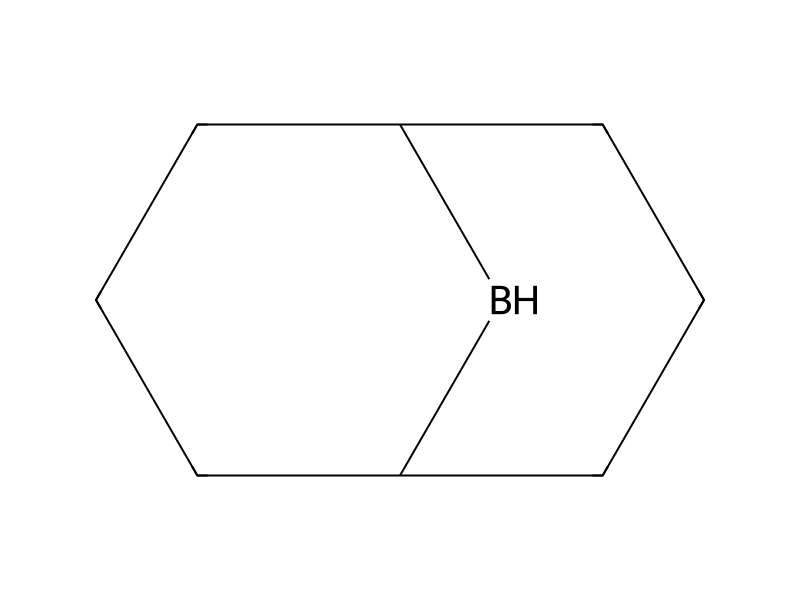
To a solution of 1-benzyl-1H-indole-3-carbaldehyde O-allyl-oxime (2.965 g, 10.2 mmol) in tetrahydrofuran (50 mL) cooled to 0° C. was added 9-BBN (0.5 M in THF)(50.0 mL, 25.0 mmol). The reaction was stirred at 0° C. for 1 hour and then warmed to room temperature over 30 minutes. Hydrogen peroxide (12 mL) was carefully added followed by a 10% NaOH solution (20 mL) and stirring continued at room temperature for 25 minutes. The reaction was quenched by the addition of saturated sodium bisulfite and extracted with ethyl acetate. The combined organic were washed with saturated sodium bisulfite and brine, dried over MgSO4 and concentrated in vacuo. The residue was purified by flash chromatography through silica gel using ethyl acetate/hexanes (10/90 to 40/60) to give 1-benzyl-1H-indole-3-carbaldehyde O-(3-hydroxy-propyl)-oxime (1.298 g, 41%) as a white solid. mp=76.4-77.7° C.; mass spectrum (+ES, M+H) m/z 309. 1H NMR (400 MHz, CDCl3); δ 8.33 (s, 1H), 8.01 (d, 1H), 7.92 (s, 1H), 7.49 (d, 1H), 7.22 (m, 7H), 5.44 (s, 2H), 4.47 (t, 1H), 4.13 (t, 2H), 3.52 (q, 2H), 1.82 (m, 2H). Elemental analysis: Calcd. for C19H20N2O2: C, 74.0; H, 6.54; N, 9.08. Found: C, 73.74; H, 6.46; N, 8.95.