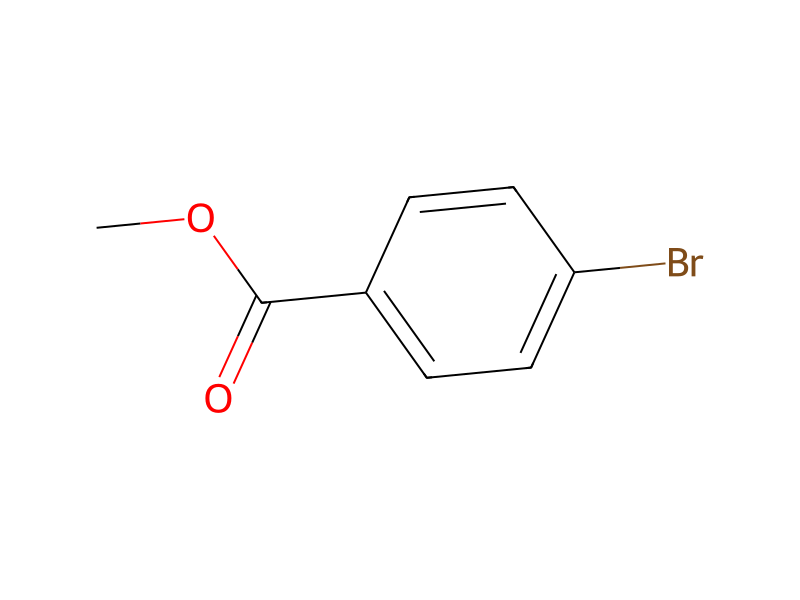
[CH3:1][O:2][C:3](=[O:11])[C:4]1[CH:9]=[CH:8][C:7](Br)=[CH:6][CH:5]=1.[CH3:12][CH:13]([OH:16])[CH:14]=[CH2:15].C1(P(C2C=CC=CC=2)C2C=CC=CC=2)C=CC=CC=1.CCCCCC>C(N(CC)CC)C.C([O-])(=O)C.[Pd+2].C([O-])(=O)C.C(OCC)(=O)C>[CH3:1][O:2][C:3](=[O:11])[C:4]1[CH:9]=[CH:8][C:7]([CH2:15][CH2:14][C:13](=[O:16])[CH3:12])=[CH:6][CH:5]=1To a solution of methyl-4-bromobenzoate (1.0 g, 4.65 mmol) in triethylamine (13 mL) was added 3-buten-2-ol (1 mL, 11.63 mmol), palladium (II) acetate (0.104 g, 0.465 mmol), and then triphenylphosphine (0.244 g, 0.93 mmol). The reaction was stirred in a 75° C. oil bath overnight under nitrogen atmosphere. Monitoring by TLC (3:1 hexane:ethyl acetate) showed the product and aryl bromide. The reaction was cooled to room temperature and then concentrated. Water was then added followed by extraction with ethyl acetate. The organic layer was washed with water and brine, dried over Na2SO4, filtered and concentrated. The crude product was purified by flash column chromatography (5:1 to 3:1 hexane:ethyl acetate) to obtain the product (250 mg, 26% yield). 1H NMR (600 MHz, CDCl3): δ 7.95 (d, 2H, J=8.4 Hz), 7.25 (d, 2H, J=8.4 Hz), 3.90 (s, 3H), 2.95 (t, 2H, J=7.45 Hz), 2.77 (t, 2H, J=7.68 Hz), 2.14 (s, 3H).
Wird geladen…