StartseiteMCPWorkbenchSkills
StartseiteWorkbenchBenachrichtigungenMein Bereich
llms.txt · MCP-AnleitungDatenschutz · Nutzungsbedingungen · Supportv1.8.0
  1. Startseite
  2. /Reaktion

Dimethylformamide → HCID 58041276, Verbindung

HRID 1399488
Notizen
Druckvorschau

Reaktionsgleichung

Reaktionsgleichung von HRID 1399488
[Cl:1][C:2]1[CH:3]=[CH:4][C:5](F)=[C:6]([C:8]([F:11])([F:10])[F:9])[CH:7]=1.CN(C)CCN(C)C.C([Li])CCC.CN(C)[CH:28]=[O:29].[O:31]1CCCC1>>[Cl:1][C:2]1[CH:7]=[C:6]([C:8]([F:11])([F:10])[F:9])[C:5]([OH:31])=[C:4]([CH:3]=1)[CH:28]=[O:29]
KomponentenReaktionsbedingungenVersuchsvorschriftAufarbeitungQuellen und NachweiseNotizen zur Reaktion

Komponenten

6

Edukt 5

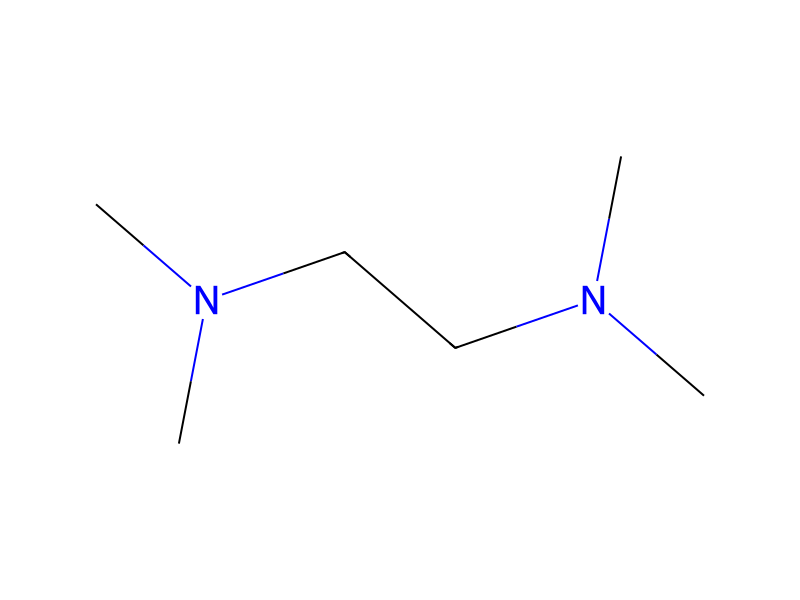
HCID 6228DimethylformamideHCID 8028TetrahydrofuranHCID 8037N,N,N',N'-TetramethylethylenediamineHCID 136091444-Chloro-1-fluoro-2-(trifluoromethyl)benzeneHCID 178418339Butyllithium

Produkt 1

HCID 58041276HCID 58041276, Verbindung

Reaktionsbedingungen

Temperatur
-78 °C

Versuchsvorschrift

5-Chloro-2-fluorobenzotrifluoride (1.5 g, 7.5 mmol) was dissolved in dry tetrahydrofuran (THF; 10 mL), treated with tetramethylethylenediamine (TMEDA; 1.6 mL, 1.2 g, 11 mmol), cooled to −78° C. and treated in portions with n-butyl lithium (n-BuLi, 2.5 M in hexanes; 3.9 mL, 9.8 mmol). After stirring at −78° C. for 90 minutes (min), the mixture was treated with N,N-dimethylformamide (DMF; 770 microliters (μL), 730 mg, 10 mmol) and stirred for a further 30 min. The cooling bath was removed and mixture warmed to 25° C. over 30 min. The reaction was quenched by addition of satd ammonium chloride (NH4Cl) solution then diluted with diethyl ether (Et2O; 30 mL). The separated organic phase was washed with satd NaCl (10 mL), dried (Na2SO4) and evaporated. The residue was dissolved in dry methanol (CH3OH; 10 mL) and treated with 30% sodium methoxide solution in CH3OH (14 g). The mixture was stirred at 25° C. for 20 h, diluted with H2O (50 mL) and extracted with Et2O (2×40 mL). The combined organic phases were washed with satd NaCl solution (20 mL), dried (Na2SO4) and evaporated. The residue was purified by silica gel chromatography using a 0 to 10% EtOAc gradient in hexane to give the benzaldehyde (1.1 g). This material (1.0 g, 4.2 mmol) was dissolved in dry CH2Cl2 (10 mL), cooled to −78° C. and treated with BBr3 (1 M solution in CH2Cl2; 5 mL, 5 mmol). The mixture was allowed to warm to 25° C. and stirred for 22 h. After cooling to −45° C., the mixture was treated with H2O (5 mL), warmed to 25° C. and extracted with EtOAc (2×15 mL). The combined extracts were washed with satd NaCl solution (10 mL), dried (Na2SO4) and evaporated. The residue was purified by silica gel chromatography using a 0 to 10% EtOAc gradient in hexane to give the aldehyde (950 mg): 1H NMR (400 MHz, CDCl3) δ 11.61 (s, 1H), 9.91 (s, 1H), 7.79 (d, J=2.5 Hz, 1H), 7.75 (d, J=2.6 Hz, 1H); EIMS m/z 224.


Aufarbeitung

  1. stirringstirred for a further 30 min
  2. customThe cooling bath was removed
  3. temperaturemixture warmed to 25° C. over 30 min
  4. customThe reaction was quenched by addition of satd ammonium chloride (NH4Cl) solution
  5. additionthen diluted with diethyl ether (Et2O; 30 mL)
  6. washThe separated organic phase was washed with satd NaCl (10 mL)
  7. dry with materialdried (Na2SO4)
  8. customevaporated
  9. dissolutionThe residue was dissolved in dry methanol (CH3OH; 10 mL)
  10. additiontreated with 30% sodium methoxide solution in CH3OH (14 g)
  11. stirringThe mixture was stirred at 25° C. for 20 h
  12. additiondiluted with H2O (50 mL)
  13. extractionextracted with Et2O (2×40 mL)
  14. washThe combined organic phases were washed with satd NaCl solution (20 mL)
  15. dry with materialdried (Na2SO4)
  16. customevaporated
  17. customThe residue was purified by silica gel chromatography

Quellen und Nachweise

ORD-Eintrag
ord-2eeb903b383c4fe98842f76ab3ae3eb9
Quelldatensatz
uspto-grants-2014_12
DOI
10.6084/m9.figshare.5104873.v1
Patentnummer
US08906829B2

Notizen zur Reaktion

Wird geladen…

Auf dieser SeiteKomponentenReaktionsbedingungenVersuchsvorschriftAufarbeitungQuellen und NachweiseNotizen zur Reaktion