StartseiteMCPWorkbenchSkills
StartseiteWorkbenchBenachrichtigungenMein Bereich
llms.txt · MCP-AnleitungDatenschutz · Nutzungsbedingungen · Supportv1.8.3
  1. Startseite
  2. /Reaktion

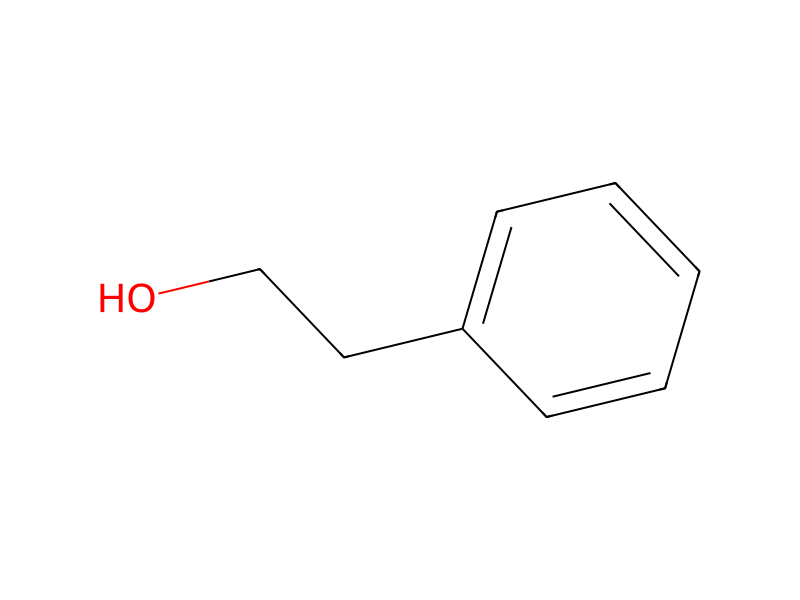
2-Phenylethanol → 7-phenethylpyrazolo[3,4-b]pyrrolo[3,4-d]pyridine-6,8(3H,7H)-dione

HRID 1400108
Drucken

Reaktionsgleichung

Reaktionsgleichung von HRID 1400108
COC1C=CC(C[N:8]2[C:12]3=[N:13][CH:14]=[C:15]4[C:19](=[O:20])[NH:18][C:17](=[O:21])[C:16]4=[C:11]3[CH:10]=[N:9]2)=CC=1.[CH2:24](O)[CH2:25][C:26]1[CH:31]=[CH:30][CH:29]=[CH:28][CH:27]=1.C1(P(C2C=CC=CC=2)C2C=CC=CC=2)C=CC=CC=1.N(C(OC(C)C)=O)=NC(OC(C)C)=O>O1CCCC1.FC(F)(F)C(O)=O>[CH2:24]([N:18]1[C:19](=[O:20])[C:15]2[C:16](=[C:11]3[CH:10]=[N:9][NH:8][C:12]3=[N:13][CH:14]=2)[C:17]1=[O:21])[CH2:25][C:26]1[CH:31]=[CH:30][CH:29]=[CH:28][CH:27]=1
KomponentenReaktionsbedingungenVersuchsvorschriftAufarbeitungQuellen und NachweiseNotizen zur Reaktion

Komponenten

7

Edukt 4

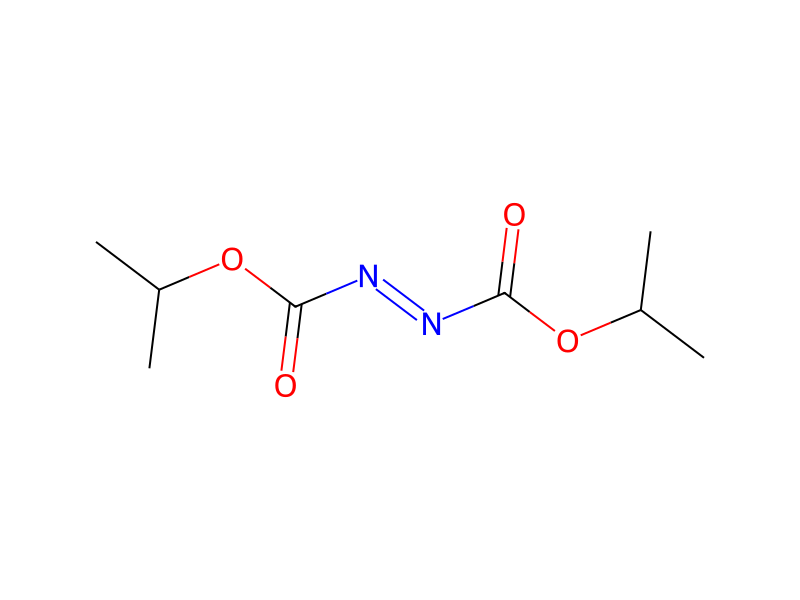
HCID 60542-PhenylethanolHCID 11776TriphenylphosphineHCID 75555Diisopropyl diazene-1,2-dicarboxylateHCID 595071793-(4-methoxybenzyl)pyrazolo[3,4-b]pyrrolo[3,4-d]pyridine-6,8(3H,7H)-dione

Produkt 1

HCID 469095657-phenethylpyrazolo[3,4-b]pyrrolo[3,4-d]pyridine-6,8(3H,7H)-dioneAusbeute 13 %

Reagenzien, Katalysatoren, Lösungsmittel 2

HCID 6422Trifluoroacetic acidLösungsmittelHCID 8028TetrahydrofuranLösungsmittel

Reaktionsbedingungen

Temperatur
65 °C

Versuchsvorschrift

A solution of 3-(4-methoxybenzyl)pyrazolo[3,4-b]pyrrolo[3,4-d]pyridine-6,8(3H,7H)-dione (150 mg, 0.48 mmol), phenethylalcohol (70 μl, 0.58 mmol) and triphenylphosphine (191 mg, 0.73 mmol) in anhydrous tetrahydrofuran (6 ml) was treated with diisopropyl azodicarboxylate (141 μl, 0.73 mmol) at room temperature and stirred for 6 hours. The mixture was partitioned between ethyl acetate (100 ml) and water (100 ml). The organic layer was dried over anhydrous sodium sulfate, filtered, and concentrated under reduced pressure to afford a brown oil. The oil was dissolved in trifluoroacetic acid (7 ml) and heated to 65° C. for 24 hours. The mixture was concentrated under reduced pressure and the product was partitioned between ethyl acetate (100 ml) and saturated aqueous sodium bicarbonate (50 ml). The organic layer was dried over anhydrous magnesium sulfate, filtered and concentrated under reduced pressure to afford a brown solid which was purified by flash column chromatography (12 g SiO2, 30% ethyl acetate in hexanes). Fractions containing the product were concentrated under reduced pressure. The solid was triturated in ethyl acetate, cooled to 0° C. and filtered to afford 7-phenethylpyrazolo[3,4-b]pyrrolo[3,4-d]pyridine-6,8(3H,7H)-dione as a white solid (18 mg, 13%). M.p.=237-239° C.; 400 MHz 1H NMR (DMSO-d6) δ: 9.00 (s, 1H), 8.51 (s, 1H), 7.23 (m, 6H), 3.85 (t, J=7.2 Hz, 2H), 2.95 (t, J=7.6 Hz, 2H); LCMS: 293 [M+H].

Aufarbeitung

  1. customThe mixture was partitioned between ethyl acetate (100 ml) and water (100 ml)
  2. dry with materialThe organic layer was dried over anhydrous sodium sulfate
  3. filtrationfiltered
  4. concentrationconcentrated under reduced pressure
  5. customto afford a brown oil
  6. concentrationThe mixture was concentrated under reduced pressure
  7. customthe product was partitioned between ethyl acetate (100 ml) and saturated aqueous sodium bicarbonate (50 ml)
  8. dry with materialThe organic layer was dried over anhydrous magnesium sulfate
  9. filtrationfiltered
  10. concentrationconcentrated under reduced pressure
  11. customto afford a brown solid which
  12. customwas purified by flash column chromatography (12 g SiO2, 30% ethyl acetate in hexanes)
  13. additionFractions containing the product
  14. concentrationwere concentrated under reduced pressure
  15. customThe solid was triturated in ethyl acetate
  16. temperaturecooled to 0° C.
  17. filtrationfiltered

Quellen und Nachweise

ORD-Eintrag
ord-5b7f527f2009468db6b002e6b8b5e81a
Quelldatensatz
uspto-grants-2014_12
DOI
10.6084/m9.figshare.5104873.v1
Patentnummer
US08906928B2

Notizen zur Reaktion

Auf dieser SeiteKomponentenReaktionsbedingungenVersuchsvorschriftAufarbeitungQuellen und NachweiseNotizen zur Reaktion