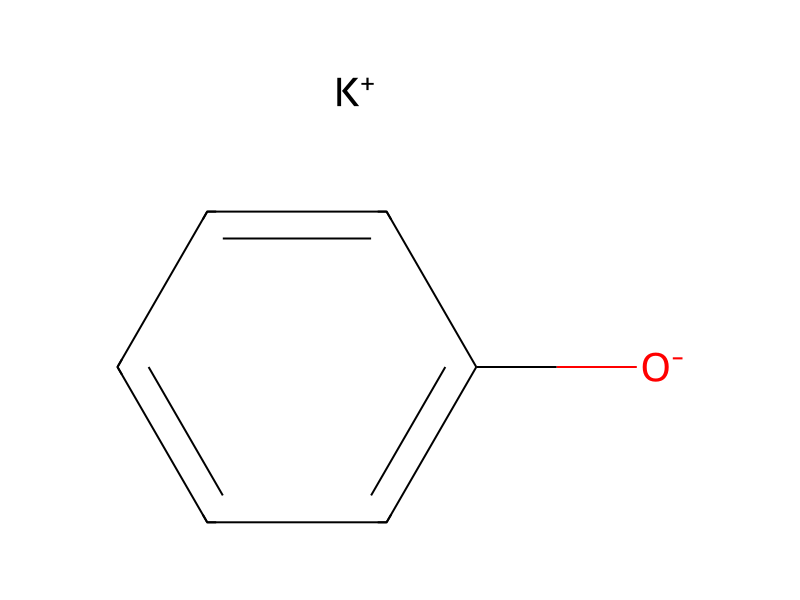
The ability of the cyclic ethers to solubilize salts were determined as follows. The cyclic ether (~90 mg) was dissolved in 0.4 ml. of chloroform and its 100 MHz pmr spectrum recorded. Excess salt (3 to 4 moles per mole of cyclic ether) was shaken with this solution which was then filtered, and the pmr spectrum again taken. The relative number of moles of the cyclic ether to the dissolved salt were determined (±5%) by integrating the appropriate signals of the protons of the cycle vs those of the salt. After the spectra were run, all solutions were returned to contact with the excess salt, and the mixtures were shaken intermittently for 24 hours without spectral change. With each salt, a parallel experiment was performed in which the cyclic ether was absent. Unless noted otherwise, no signal was observed for the salt in the absence of the cyclic ether, indicating the salt alone to be too insoluble to be detected. Run 23 involved benzoyl hexafluorophosphate as the guest salt. This material both complexed with and more slowly reacted with (benzoylated) the host cycle. Within 5 minutes, the nmr spectrum of the mixture indicated that 80% of the benzoyl salt originally complexed had reacted. The aryl-diazonium salts were stabilized by complexation, as shown by the decreased rate of nitrogen evolution upon complexation of the more unstable of them. Reactions other than complexation of the diazonium salts with the cyclic ethers were very slow. However, reactions of the complexed diazonium salts with compounds with which they ordinarily react rapidly (e.g., N,N-dimethylaniline, potassium phenoxide, Sandmeyer reaction reagents, hypophosphorous acid) were not inhibited by complexation. For example, when 2.25 g. (10 mmol) of 4-chlorobenzenediazonium tetrafluoroborate was dissolved at 25° in a solution of 4.88 g. (10 mmol) of a cyclic ether 6 in 50 ml. of dichloromethane, cooled to -75°, and N,N-dimethylaniline added, a 95% yield of 4-chloro-4'-(N,N-dimethylamino)-azobenzene was produced.