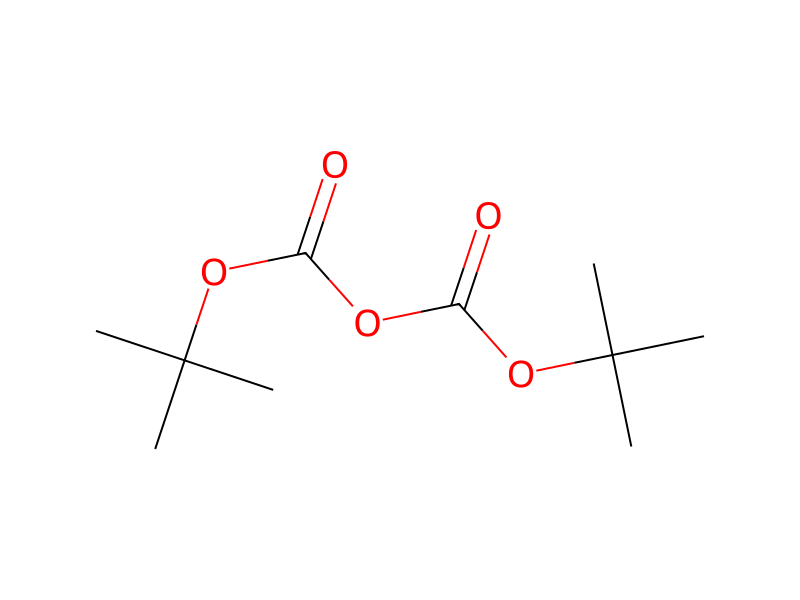
Continuing, the resulted white powder was placed in a 100 ml eggplant type flask to which was then added a Teflon™-coated stirring bar and 100 ml of dioxane. 1.68 (15 millimoles) of potassium t-butyldicarbonate were added in a nitrogen atmosphere and stirred for 4 hours at 0° C. 3 g (13.9 millimoles) of di-t-butyldicarbonate were then added followed by additionally stirring for 3 hours at 0° C. After concentrating the reaction solution, it was dropped in 1.5 liters of methanol resulting in precipitation. The formed precipitate was filtered off with a glass filter and dried for 16 hours at 0.1 mmHg and 45° C. The resulted white powder was dissolved in THF, and the above-mentioned precipitation and drying procedure was repeated twice to obtain a white resin powder. When the composition of this white powder was examined by 1H-NMR, the ratio of phenol to butoxycarbonylphenol to methacrylate in the copolymer was determined to be 31:39:30. The transmittance of this copolymer at a wavelength of 248 nm was 60% (film thickness: 1 μm, on a quartz substrate), thus indicating excellent transparency. In addition, other analysis results were as shown below.