Lithium hydroxide, monohydrate → 4-Bromo-2-dimethylcarbamoylsulfanyl-benzoic acid
Reaktionsgleichung

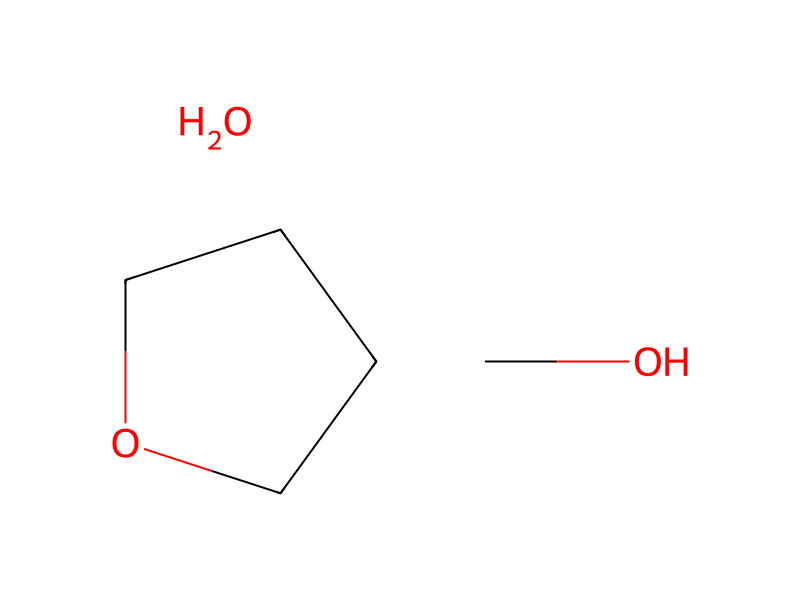
C[O:2][C:3](=[O:17])[C:4]1[CH:9]=[CH:8][C:7]([Br:10])=[CH:6][C:5]=1[S:11][C:12](=[O:16])[N:13]([CH3:15])[CH3:14].O.[OH-].[Li+]>C1COCC1.CO.O>[Br:10][C:7]1[CH:8]=[CH:9][C:4]([C:3]([OH:17])=[O:2])=[C:5]([S:11][C:12](=[O:16])[N:13]([CH3:14])[CH3:15])[CH:6]=1Komponenten



Versuchsvorschrift
A mixture of 4-bromo-2-dimethylcarbamoylsulfanyl-benzoic acid methyl ester (2.04 g, 6.42 mmol) and lithium hydroxide hydrate (404 mg, 9.62 mmol) in (1/1/1) THF/MeOH/H2O (21 mL) was stirred at room temperature for 6 h. The reaction mixture was concentrated to remove most organic solvents. The residue was diluted with water (100 mL) and extracted with EtOAc (20 mL), which is discarded. The aqueous layer was acidified to pH 3-4 using 1 N HCl and extracted with EtOAc (2×100 mL). The combined organic layers were washed with brine, dried over MgSO4, filtered and concentrated to provide 4-bromo-2-dimethylcarbamoylsulfanyl-benzoic acid (1.67 g). 1H NMR (200 MHz, CDCl3): δ ppm)=7.76 (m, 2H), 7.61 (dd, J=8.2, 2.0 Hz, 1H), 3.15 (br s, 3H), 3.06 (br s, 3H).
Aufarbeitung
- concentrationThe reaction mixture was concentrated
- customto remove most organic solvents
- additionThe residue was diluted with water (100 mL)
- extractionextracted with EtOAc (20 mL), which
- extractionextracted with EtOAc (2×100 mL)
- washThe combined organic layers were washed with brine
- dry with materialdried over MgSO4
- filtrationfiltered
- concentrationconcentrated
Quellen und Nachweise
- ORD-Eintrag
- ord-f7691327d2a04df19497c589abde5596
- Quelldatensatz
- uspto-grants-2015_01
- Patentnummer
- US08927591B2
Notizen zur Reaktion
Wird geladen…