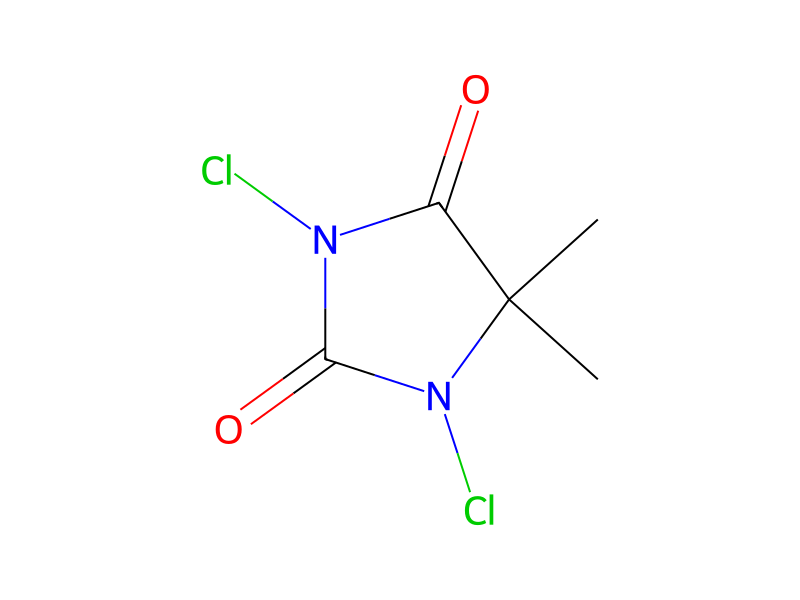
Propan-2-yl 4-amino-6-chloro-5-fluoropicolinate (634 milligrams (mg), 2.73 mmol) was slurried in acetonitrile (11 mL). 1,3-Dichloro-5,5-dimethyl-hydantoin (303 mg, 1.54 mmol) was added as a solid, and the reaction mixture was stirred at reflux for 2.5 h. Additional 1,3-dichloro-5,5-dimethylhydantoin (50 mg, 0.25 mmol) was added, and the reaction mixture was stirred at reflux for an additional hour. Water (20 mL) was added. Acetonitrile was then removed by rotary evaporation to give an oily, yellow solid which was extracted with EtOAc (2×20 mL). The combined organic extracts were washed with 10% sodium bisulfite (NaHSO3) solution, satd aq NaHCO3 solution and brine, dried (MgSO4) and concentrated under reduced pressure to provide a pale orange solid (671 mg, 92%): 1H NMR (400 MHz, CDCl3) δ 5.29 (septet, J=6.3 Hz, 1H, CHMe2), 5.19 (br s, 2H, NH2), 1.40 (d, J=6.3 Hz, 6H, CHMe2); 19F NMR (376 MHz, CDCl3) δ −136.5.