StartseiteMCPWorkbenchSkills
StartseiteWorkbenchBenachrichtigungenMein Bereich
llms.txt · MCP-AnleitungDatenschutz · Nutzungsbedingungen · Supportv1.8.0
  1. Startseite
  2. /Reaktion

Acetaldehyde → N-[3-(4-Chloro-2-methyl-2H-pyrazol-3-yl)-4-(2-ethylamino-2-methyl-propoxy)-phenyl]-3-trifluoromethyl-benzamide

HRID 1425511
Notizen
Druckvorschau

Reaktionsgleichung

Reaktionsgleichung von HRID 1425511
[C:1](O[BH-](OC(=O)C)OC(=O)C)(=O)[CH3:2].[Na+].[NH2:15][C:16]([CH3:46])([CH3:45])[CH2:17][O:18][C:19]1[CH:24]=[CH:23][C:22]([NH:25][C:26](=[O:37])[C:27]2[CH:32]=[CH:31][CH:30]=[C:29]([C:33]([F:36])([F:35])[F:34])[CH:28]=2)=[CH:21][C:20]=1[C:38]1[N:39]([CH3:44])[N:40]=[CH:41][C:42]=1[Cl:43].C(=O)C.FC(F)(F)C([O-])=O>C1COCC1.C(OCC)(=O)C.C(=O)(O)[O-].[Na+]>[Cl:43][C:42]1[CH:41]=[N:40][N:39]([CH3:44])[C:38]=1[C:20]1[CH:21]=[C:22]([NH:25][C:26](=[O:37])[C:27]2[CH:32]=[CH:31][CH:30]=[C:29]([C:33]([F:36])([F:34])[F:35])[CH:28]=2)[CH:23]=[CH:24][C:19]=1[O:18][CH2:17][C:16]([NH:15][CH2:1][CH3:2])([CH3:46])[CH3:45]
KomponentenVersuchsvorschriftAufarbeitungQuellen und NachweiseNotizen zur Reaktion

Komponenten

8

Edukt 4

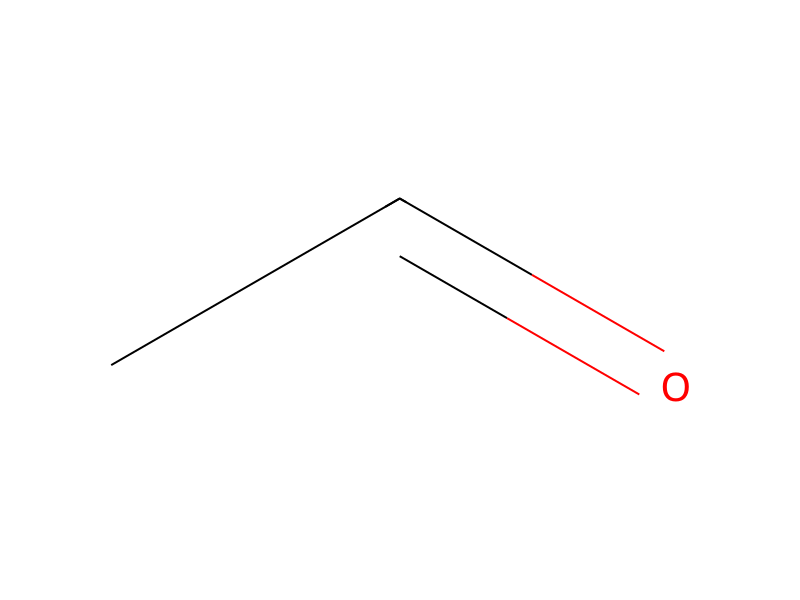
HCID 177AcetaldehydeHCID 84468TrifluoroacetateHCID 5049666Sodium triacetoxyborohydrideHCID 57814739N-(4-(2-amino-2-methylpropoxy)-3-(4-chloro-2-methyl-2H-pyrazol-3-yl)phenyl)-3-(trifluoromethyl)benzamide

Produkt 1

HCID 24888500N-[3-(4-Chloro-2-methyl-2H-pyrazol-3-yl)-4-(2-ethylamino-2-methyl-propoxy)-phenyl]-3-trifluoromethyl-benzamide
Ausbeute 22 %

Reagenzien, Katalysatoren, Lösungsmittel 3

HCID 8028TetrahydrofuranLösungsmittelHCID 8857Ethyl AcetateLösungsmittelHCID 516892Sodium BicarbonateLösungsmittel

Versuchsvorschrift

Sodium triacetoxyborohydride (34.2 mg, 161 μmol) was added to a solution of N-(4-(2-amino-2-methylpropoxy)-3-(4-chloro-2-methyl-2H-pyrazol-3-yl)phenyl)-3-(trifluoromethyl)benzamide (53.8 mg, 115 μmol) and acetaldehyde (5.08 mg, 115 μmol) in THF (0.5 mL), and the mixture was stirred at room temperature. After 4 hours, the reaction was quenched with saturated sodium bicarbonate and extracted with dichloromethane. The extract was evaporated to dryness, the residue was redissolved in methanol, and the product was isolated by preparative HPLC. The trifluoroacetate salt was dissolved in a mixture of ethyl acetate and saturated sodium bicarbonate. The organic layer was washed with brine, dried with sodium sulfate, and evaporated to dryness to afford the title compound (12.5 mg, 22%). LCMS m/z (%)=497.5 (M+H, 37Cl 45.4), 495.3 (M+H, 35Cl 100.0%). 1H NMR (400 MHz, MeOH-d4) δ 1.00 (t, J=7.07 Hz, 3H) 1.07 (s, 6H) 2.42-2.51 (m, 2H) 3.71 (s, 3H) 3.85-3.88 (m, J=9.35 Hz, 1H) 3.90 (d, J=9.09 Hz, 1H) 7.22 (d, J=9.09 Hz, 1H) 7.58 (s, 1H) 7.67 (d, J=2.78 Hz, 1H) 7.73 (t, J=7.83 Hz, 1H) 7.85-7.92 (m, 2H) 8.21 (d, J=7.83 Hz, 1H) 8.27 (s, 1H).

Aufarbeitung

  1. customthe reaction was quenched with saturated sodium bicarbonate
  2. extractionextracted with dichloromethane
  3. customThe extract was evaporated to dryness
  4. dissolutionthe residue was redissolved in methanol
  5. customthe product was isolated by preparative HPLC
  6. washThe organic layer was washed with brine
  7. dry with materialdried with sodium sulfate
  8. customevaporated to dryness

Quellen und Nachweise

ORD-Eintrag
ord-5241535fb2a24b87af8638172a32cb97
Quelldatensatz
uspto-grants-2015_01
DOI
10.6084/m9.figshare.5104873.v1
Patentnummer
USRE045337E1

Notizen zur Reaktion

Wird geladen…

Auf dieser SeiteKomponentenVersuchsvorschriftAufarbeitungQuellen und NachweiseNotizen zur Reaktion