Water → 3-Phenyl-5-{3-(1-pyrrolidinyl)butyryl}isoxazole
HRID 1440336
Reaktionsgleichung

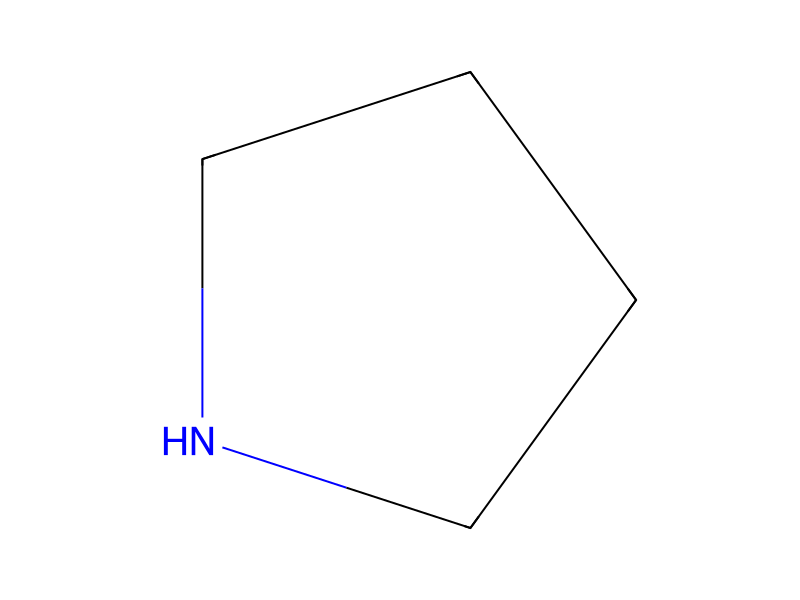
[NH:1]1[CH2:5][CH2:4][CH2:3][CH2:2]1.[C:6]1([C:12]2[CH:16]=[C:15]([C:17](=[O:21])[CH:18]=[CH:19][CH3:20])[O:14][N:13]=2)[CH:11]=[CH:10][CH:9]=[CH:8][CH:7]=1.O>C(OCC)(=O)C>[C:6]1([C:12]2[CH:16]=[C:15]([C:17](=[O:21])[CH2:18][CH:19]([N:1]3[CH2:5][CH2:4][CH2:3][CH2:2]3)[CH3:20])[O:14][N:13]=2)[CH:7]=[CH:8][CH:9]=[CH:10][CH:11]=1Komponenten
5
Edukt 3


Produkt 1

Reagenzien, Katalysatoren, Lösungsmittel 1

Versuchsvorschrift
Pyrrolidine (5 ml) was added to 1.1 g (5.2mmol) of 3-phenyl-5-(2-butenoyl)isoxazole prepared above in the procedure (1). The resulting mixture was stirred at room temperature for 3 hours. Water and ethyl acetate were added to the reaction mixture, so that a product formed was extracted in an organic layer. The organic layer was collected, dried over anhydrous magnesium sulfate, and then concentrated, whereby 3-phenyl-5-{3-(1-pyrrolidinyl)butyryl}isoxazole was obtained as colorless oil.