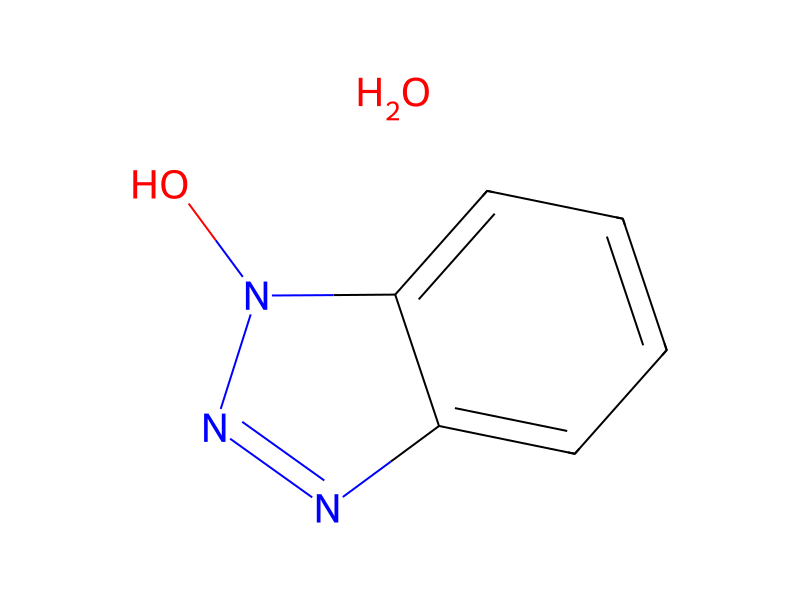
[C:1]([C:3]1[CH:22]=[CH:21][C:6]([O:7][C:8]2[C:9]([CH2:19][CH3:20])=[N:10][N:11]([CH2:15][C:16]([OH:18])=O)[C:12]=2[CH2:13][CH3:14])=[CH:5][CH:4]=1)#[N:2].[C:23]([NH:26][NH2:27])(=[O:25])[CH3:24].Cl.CN(C)CCCN=C=NCC.O.ON1C2C=CC=CC=2N=N1.CN1CCOCC1>CN(C)C=O>[C:23]([NH:26][NH:27][C:16](=[O:18])[CH2:15][N:11]1[C:12]([CH2:13][CH3:14])=[C:8]([O:7][C:6]2[CH:5]=[CH:4][C:3]([C:1]#[N:2])=[CH:22][CH:21]=2)[C:9]([CH2:19][CH3:20])=[N:10]1)(=[O:25])[CH3:24]The acid of step (a) above (400 mg, 1.34 mmol), acetic hydrazide (109 mg, 1.47 mmol), 1-(3-dimethylaminopropyl)-3-ethylcarbodiimide hydrochloride (372 mg, 1.47 mmol), 1-hydroxybenzotriazole hydrate (192 mg, 1.47 mmol) and N-methylmorpholine (525 mg, 5.36 mmol) were stirred in N,N-dimethylformamide (6 ml) at room temperature for 18 hours. The reaction mixture was then evaporated under reduced pressure and the residue was partitioned between dichloromethane (40 ml) and water (30 ml). The organic layer was dried over magnesium sulphate, filtered, and then concentrated under reduced pressure. The crude product was purified by flash chromatography on silica gel eluting with dichloromethane:methanol:ammonia (93:7:0.5, by volume) to provide the title compound (345 mg, 72%).